Prologue · c. 43–1066
Before the Conquest
From the Roman province of Britannia to the Anglo-Saxon kingdoms, the Viking invasions and the birth of the kingdom of England: a short introduction to the thousand years before 1066.
Overview
In AD 43 the Roman emperor Claudius sent an army across the Channel, and southern Britain became the Roman province of Britannia. The Romans built roads, towns and Hadrian's Wall and ruled for almost four hundred years. Around 410 the legions withdrew, and Britain lost the protection of the empire.
From the fifth century Angles, Saxons and Jutes from what is now northern Germany and Denmark crossed the sea and settled, founding a patchwork of small kingdoms. The name "England" means simply "land of the Angles". In 597 the pope sent Augustine to Kent as a missionary, and Christianity gradually spread through the kingdoms.
In the late eighth century Viking raiders began to strike the coasts. From 865 the Danish "Great Heathen Army" conquered Northumbria, East Anglia and Mercia; only Wessex in the south held out, under Alfred the Great. In 878 Alfred defeated the Danes at Edington, and a frontier was agreed that left the north-east as the "Danelaw". Alfred's descendants gradually won back the north, and in 927 his grandson Æthelstan became the first king to rule all of England.
Early in the eleventh century the Danes returned. In 1016 the Danish prince Cnut became King of England, and later of Denmark and Norway too. In 1042 the House of Wessex was restored in Edward the Confessor, who had grown up in Normandy and had no children. When he died in January 1066, England's most powerful nobleman, Harold Godwinson, was crowned king — but Duke William of Normandy and King Harald Hardrada of Norway both claimed the throne as well. That disputed succession is where the story of this site begins.
Imperium
The Changing Map
- Wessex
- English Mercia (ally)
- The Danelaw and the north
- Welsh principalities
- Kingdoms of the Scots
- Kingdom of England
- Denmark (also ruled by Cnut)
- Welsh principalities
- Kingdom of Scotland
Borders are indicative only, approximated from modern administrative regions.
878
878: Alfred and the Danes
After Edington, Alfred the Great held Wessex in the south, allied with English Mercia in the west; the east and north were under Danish control — the Danelaw. Some of England's north–south differences can be traced back to this division.
1016
1016: Cnut's North Sea empire
Æthelstan united England in 927. Early in the eleventh century the Danes returned, and in 1016 Cnut became king of all England — and later of Denmark and Norway too, ruling an empire around the North Sea.
Stemma
Family Tree
The principal figures of this era. Gold frames mark monarchs of England or Britain; diamonds mark marriages. Select a person to open their entry.
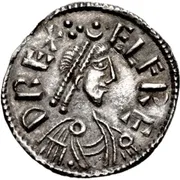 Alfred the Great849–899
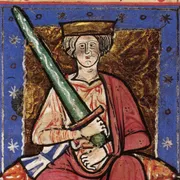 Æthelred II966–1016
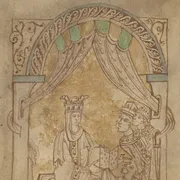 Emma of Normandy985–1052
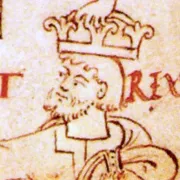 Cnut the Great995–1035
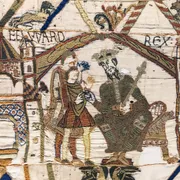 Edward the Confessor1003–1066
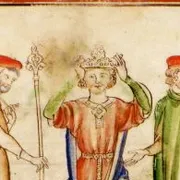 Harold II1022–1066
Chronica
Chronology
- 43
Roman invasion of Britain
The emperor Claudius sent an army across the Channel, and southern Britain became the Roman province of Britannia.
- 410
End of Roman rule
Around 410 the Roman army left Britain to fend for itself. Angles, Saxons and Jutes then began to cross the sea and settle.
- 597
Augustine's mission to Kent
Pope Gregory the Great sent Augustine to Kent, whose king was baptised. Augustine became the first Archbishop of Canterbury.
- 7938 June 793
Viking raid on Lindisfarne
Vikings sacked the monastery of Lindisfarne on the Northumbrian coast — traditionally the start of the Viking Age in Britain.
- 865
The Great Heathen Army lands
A great Danish army landed in East Anglia and over the next decade conquered Northumbria, East Anglia and most of Mercia.
- 878May 878
Battle of Edington
Alfred defeated the Danish leader Guthrum at Edington; Guthrum was baptised, and a frontier later left the north-east as the Danelaw.
- 92712 July 927
Æthelstan becomes king of all England
Alfred's grandson Æthelstan took York, and the northern kings submitted to him at Eamont Bridge, making him the first king of all England.
- 1002
Æthelred II marries Emma of Normandy
The first marriage between England and Normandy. Emma became the mother of Edward the Confessor and great-aunt of William the Conqueror.
- 101630 November 1016
Cnut becomes king of all England
After the deaths of Æthelred II and his son Edmund Ironside, the Danish prince Cnut became king of all England. The next year he married Emma.
- 10428 June 1042
Edward the Confessor becomes king
When Cnut's son Harthacnut died, Edward, long an exile in Normandy, returned to take the throne and the House of Wessex was restored.
Personae
People of this Era
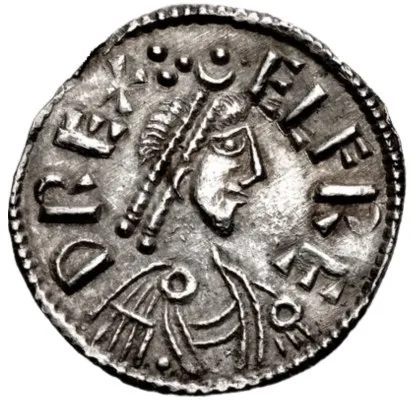 Alfred the Great849–899Biography
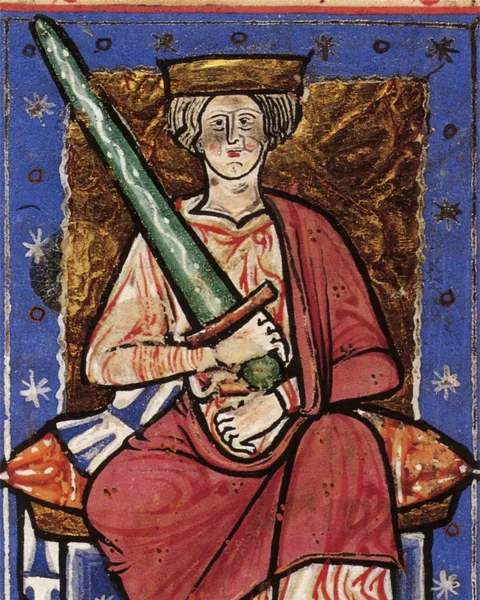 Æthelred II966–1016
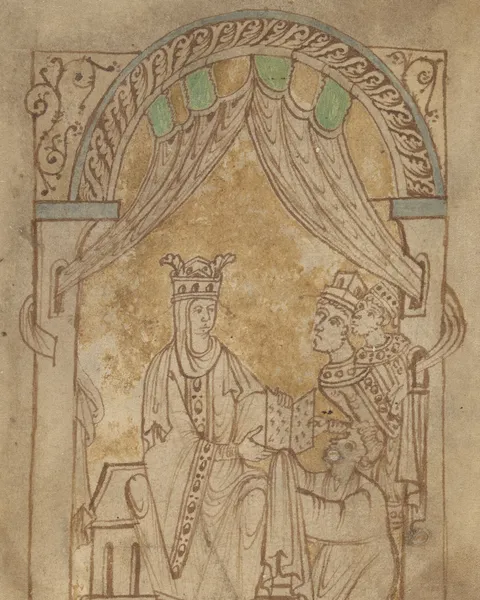 Emma of Normandy985–1052
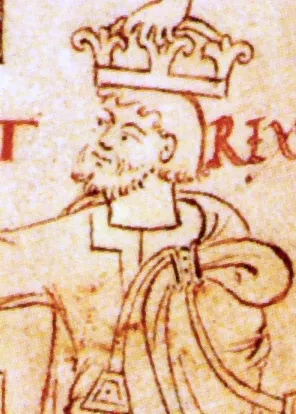 Cnut the Great995–1035
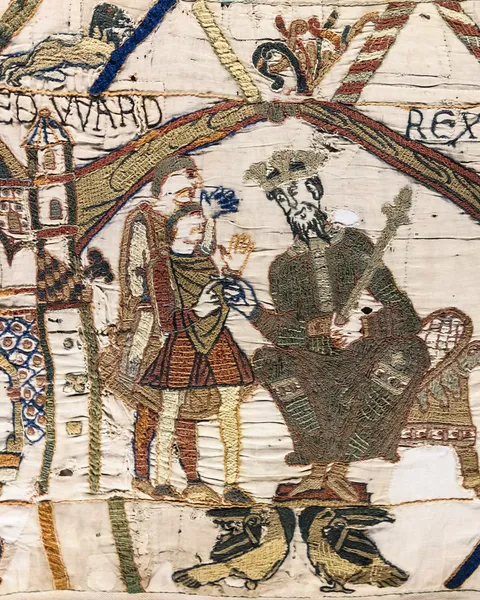 Edward the Confessor1003–1066
 Harold II1022–1066