A Childhood at War
Richard was born on 2 October 1452 at Fotheringhay Castle in Northamptonshire, the youngest son of Richard, Duke of York. In 1460 his father and his brother Edmund were killed at Wakefield, and the eight-year-old Richard was sent to safety in Burgundy. The next year his eldest brother won at Towton and became Edward IV, and Richard was made Duke of Gloucester.
The Loyal Brother
In 1470 Warwick the Kingmaker changed sides and Edward IV was driven into exile, with Richard at his side. The next year the brothers returned and defeated the Lancastrians at Barnet and Tewkesbury, the eighteen-year-old Richard already commanding a wing. Their other brother, George, Duke of Clarence, proved fickle and was executed for treason in 1478; Richard stayed loyal throughout. His motto was Loyaulte me lie — “Loyalty binds me”.
For more than a decade Richard governed the north of England, ruling well and winning the loyalty of its people. In 1472 he married Anne Neville, daughter of the Earl of Warwick, and they had one son.
Taking the Crown
In April 1483 Edward IV died suddenly, leaving the twelve-year-old Edward V as king and Richard, by his will, as Protector. Richard had long been at odds with the family of the queen mother, Elizabeth Woodville. He swiftly intercepted his nephew on the road to London and arrested the boy’s uncle; in June he had his late brother’s friend Lord Hastings executed for treason.
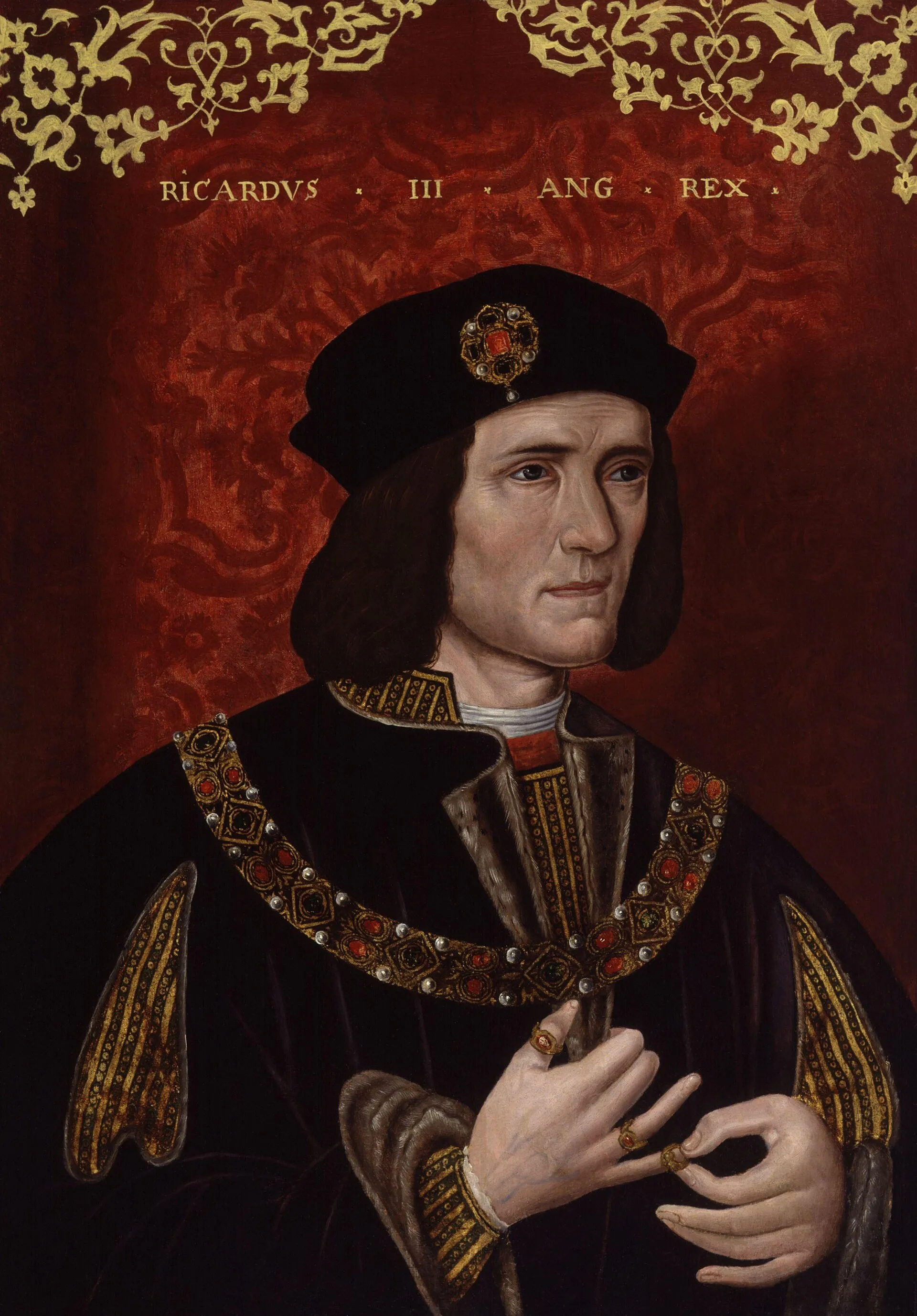
Soon a cleric claimed that Edward IV had been pre-contracted to marry another woman, so that his marriage to Elizabeth Woodville was invalid and all their children illegitimate. On that basis Parliament acclaimed Richard king, and on 6 July he was crowned in Westminster Abbey as Richard III.
The Princes in the Tower
Edward V and his younger brother Richard were lodged in the Tower of London and never seen again after that summer. Rumours that their uncle had murdered them were already circulating. In 1674 workmen at the Tower found the bones of two children, taken to be the princes and buried in Westminster Abbey, though they have never been scientifically examined.
Whether Richard ordered his nephews’ deaths has been argued for five hundred years. His defenders point out that others, such as the future Henry VII, had motives too; but most historians conclude that, since the boys vanished while in Richard’s custody, he bears the responsibility.
Bosworth
Richard reigned for only two years. In the autumn of 1483 his former ally the Duke of Buckingham rebelled and failed; in 1484 his only son died, and the next year his queen. His Parliament passed laws protecting the accused, such as the right to bail, but he could not win back the trust he had lost.
In August 1485 Henry Tudor, in exile in France, landed in Wales. At Bosworth on 22 August the Stanley family, expected to support Richard, turned against him. Richard led a cavalry charge straight at Henry’s position and came close to reaching him before being cut down — the last English king to die in battle. The Plantagenet dynasty was over; the Tudor age had begun.
The King in the Car Park
Tudor historians and Shakespeare’s play portrayed Richard as a hunchbacked, murderous usurper. In 2012 archaeologists excavating a car park in Leicester, on the site of the old Grey Friars church, found a skeleton with severe scoliosis and fatal head wounds. DNA analysis confirmed that it was Richard III. His curved spine would have made one shoulder higher than the other — not the hunchback of Shakespeare’s play. In 2015 he was reburied with royal honours in Leicester Cathedral.