A Sickly Second Son
Charles was born at Dunfermline Palace in Scotland on 19 November 1600, the second son of James VI of Scotland. A frail child with weak legs and a stammer, he did not walk until he was about four. Three years after his birth his father inherited the English crown and the family moved to London. In 1612 his much-loved elder brother, Prince Henry, died, and the twelve-year-old Charles became heir.
The Spanish Match and Accession
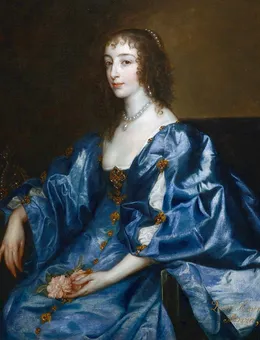
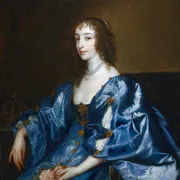
In 1623 Charles and his father’s favourite, the Duke of Buckingham, travelled in disguise to Madrid to woo the Spanish Infanta Maria Anna. The “Spanish Match” came to nothing — the Infanta later married the Habsburg Emperor Ferdinand III — and Charles married the French princess Henrietta Maria instead.
Charles became king in 1625. Buckingham’s foreign wars went from failure to failure, Parliament refused money, and in 1628 it forced the king to accept the Petition of Right, conceding that he could not tax without Parliament’s consent or imprison without cause. That year Buckingham was assassinated.
The Personal Rule
Charles believed that kings answered to God alone. In 1629 he dissolved Parliament and did not call another for eleven years — the Personal Rule. He raised money through the ancient levy of Ship Money and backed Archbishop William Laud’s ceremonial High Church policy, which convinced many Puritans that the king meant to bring back Catholicism.
In 1637 Charles imposed a new prayer book on Presbyterian Scotland, provoking riots and the Bishops’ Wars. To pay for the fighting he had to recall Parliament in 1640. Parliament turned on the king’s ministers, executed the Earl of Strafford and pressed demand after demand to limit royal power. In January 1642 Charles marched into the House of Commons with soldiers to arrest five members, only to find they had fled. In August he raised his standard at Nottingham and civil war began.
The Civil War
The early fighting was indecisive. Then Parliament allied with the Scots and won at Marston Moor in 1644, and in 1645 the New Model Army, which Cromwell had helped to create, crushed the royalists at Naseby. In 1646 Charles surrendered to the Scots, who later handed him over to Parliament. Even while negotiating he made a secret alliance with the Scots and started a second war in 1648, which he also lost.
The army lost all patience with the king and purged Parliament of members who favoured a settlement. In January 1649 the remaining members set up a special court to try Charles for treason. He refused to recognise its authority or to plead. On 30 January he was beheaded outside the Banqueting House in Whitehall. He is said to have worn an extra shirt so that he would not shiver in the cold and be thought afraid.
The Royal Collector
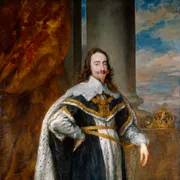
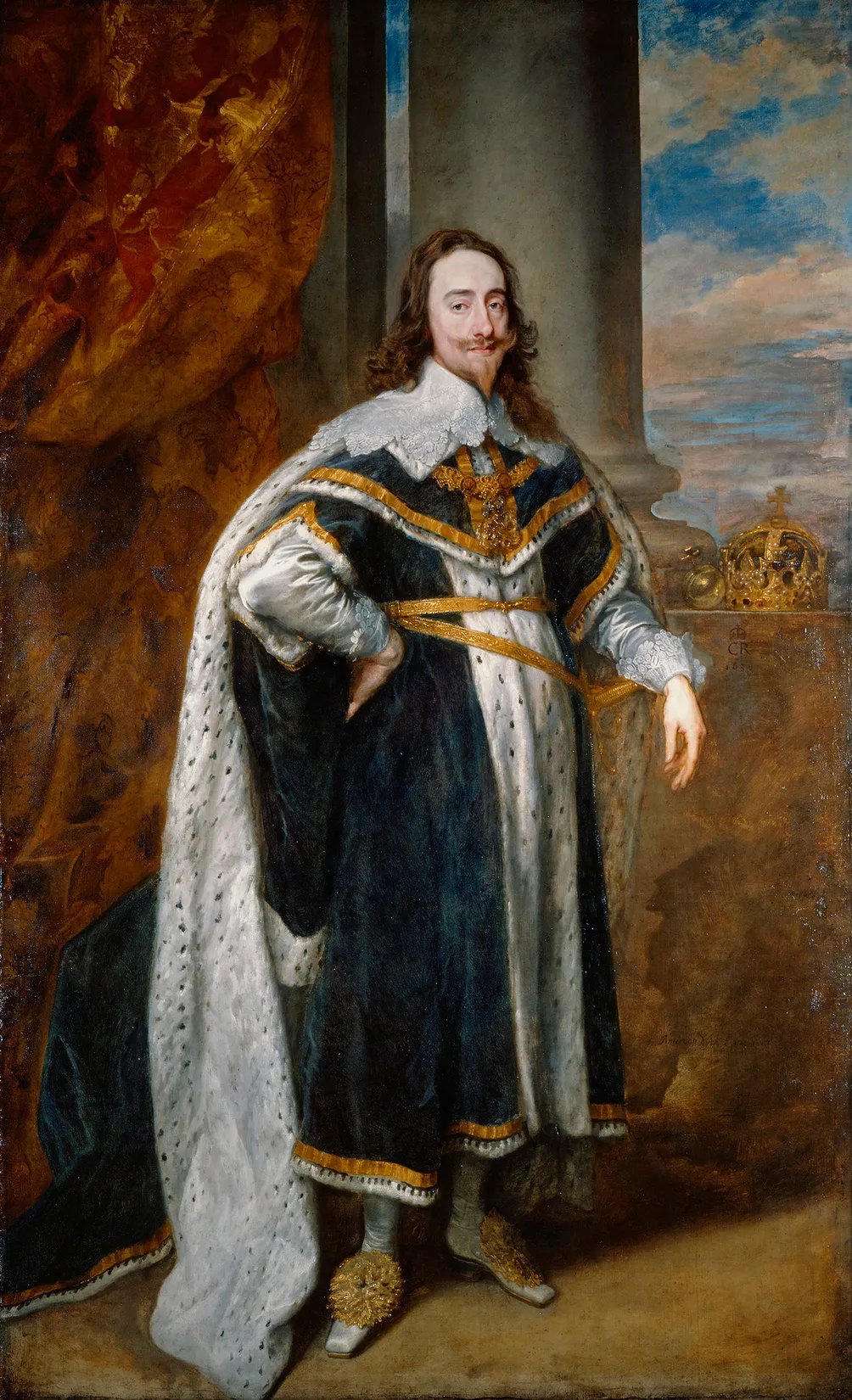
Stubborn and misguided in politics, Charles had an unerring eye for art. He made the Flemish painter Anthony van Dyck his court painter, and Van Dyck’s portraits created the king’s enduring image of noble melancholy; Rubens painted the great ceiling of the Banqueting House — the very building from which Charles walked to the scaffold. His collection of Titian, Raphael and other masters was the finest in Europe. Most of it was sold off by the republic after his death; some was bought back after the Restoration and remains at the heart of the Royal Collection today.