The Cradle King
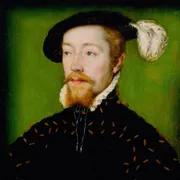
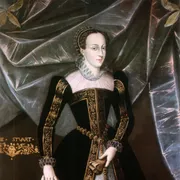
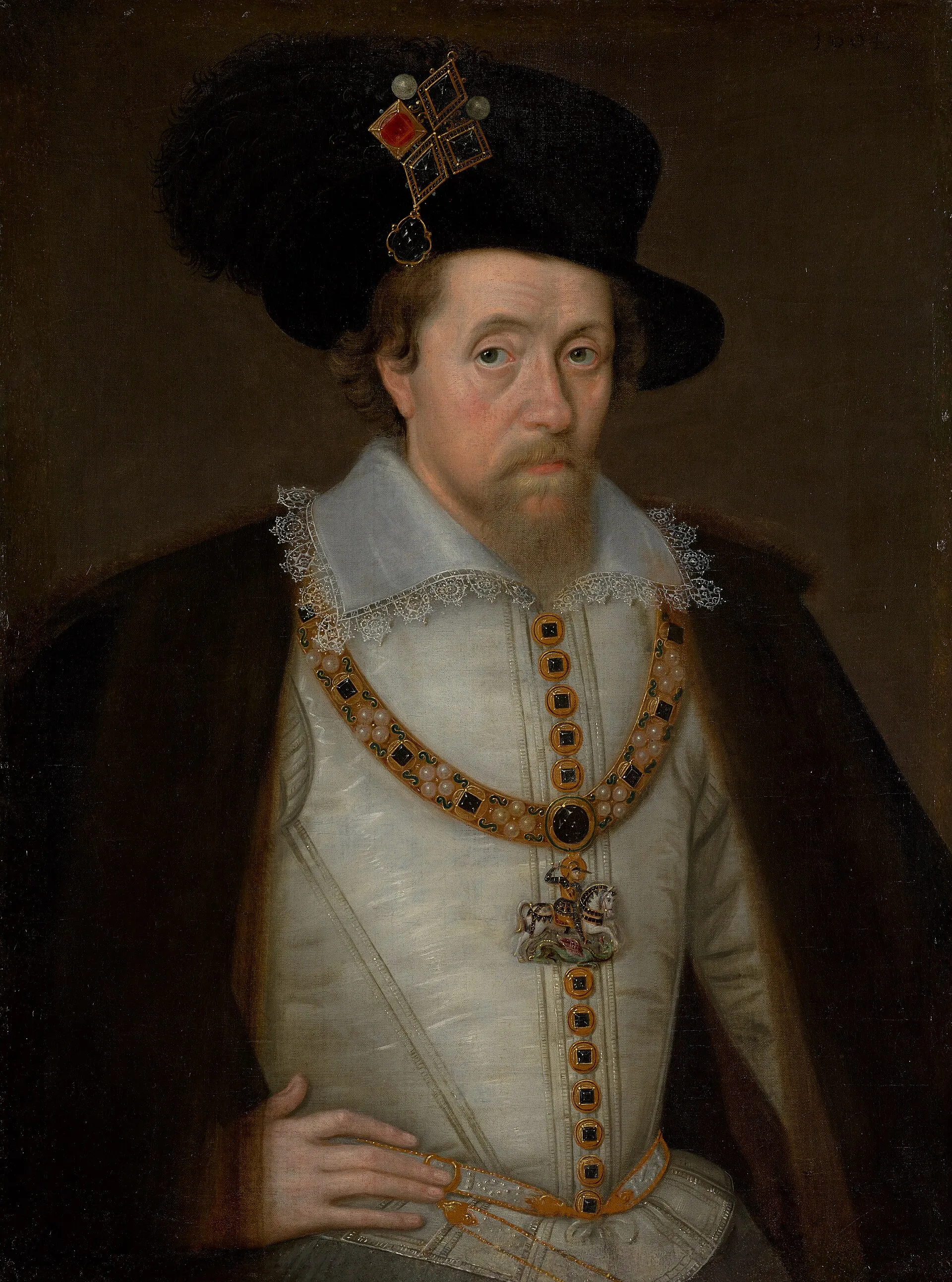
James was born at Edinburgh Castle on 19 June 1566, the son of Mary, Queen of Scots, and Lord Darnley. The following February Darnley’s lodging in Edinburgh was blown up and his body found in the garden; Mary promptly married the Earl of Bothwell, the chief suspect, and the nobles rose against her. In July 1567 they forced her to abdicate, and the thirteen-month-old James was crowned at Stirling as King James VI of Scotland. He never saw his mother again.
James spent his childhood at Stirling Castle, drilled by the humanist scholar George Buchanan in Latin, Greek and theology. One regent after another was assassinated or executed — among them his grandfather, the Earl of Lennox — and in 1582, aged sixteen, James was kidnapped by a group of nobles and held for almost a year. He feared violence all his life, and is said to have worn padded clothing against assassins’ daggers.
King of Scots
As an adult James proved a shrewd politician, steadily curbing the power of the Scottish nobility and the Presbyterian Kirk. When Elizabeth I executed his mother in 1587 he protested only mildly, knowing that he was the strongest claimant to the English throne.
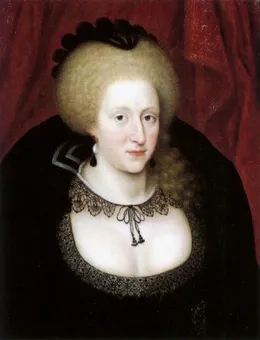
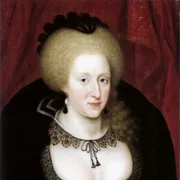
In 1589 he married Anne of Denmark. When storms drove back his bride’s fleet, James sailed to Norway himself to fetch her — the most romantic act of his life. Back home he became convinced that witches had raised the storms, personally interrogated the accused “witches” of North Berwick, and in 1597 published Daemonologie. He also wrote The True Law of Free Monarchies and Basilikon Doron, a book of advice for his son, setting out the theory of the divine right of kings.
Two Kingdoms, One King
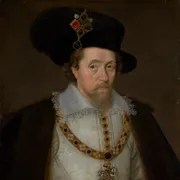
When Elizabeth I died in March 1603, James inherited the English throne as the great-grandson of Margaret Tudor — the “Union of the Crowns”. On his journey south from Edinburgh to London he handed out honours freely, creating hundreds of knights in his first year. He hoped to merge the two countries into one, styled himself “King of Great Britain”, and in 1606 introduced a new flag combining the crosses of England and Scotland, the forerunner of the Union Flag. But both parliaments opposed union, which came only a century later, in 1707.
The Gunpowder Plot and the King James Bible
English Catholics had hoped the new king would ease the laws against them, and were bitterly disappointed. In 1605 a group of Catholic conspirators packed thirty-six barrels of gunpowder into a cellar beneath the House of Lords, planning to blow up the king and Parliament at the state opening on 5 November. The plot was discovered at the last moment, and Guy Fawkes, guarding the powder, was arrested on the spot. Britons still let off fireworks every 5 November to mark the king’s escape.
In 1604 James called a conference at Hampton Court to settle disputes between the established Church and the Puritans, and agreed there to a new translation of the Bible. Some fifty scholars worked on it for seven years, and the King James Version appeared in 1611. Its majestic prose has shaped the English language ever since, and many everyday phrases come from it.
Peacemaker and Parliament
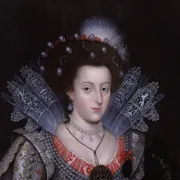
James saw himself as Rex Pacificus, the king of peace. In 1604 he made peace with Spain, ending nearly twenty years of war; he married his daughter Elizabeth Stuart to the Elector Palatine, a German Protestant leader, while hoping to marry his son to a Spanish princess, so balancing the Catholic and Protestant camps. When the Thirty Years’ War broke out in 1618 and his son-in-law lost Bohemia and the Palatinate, James still refused to go to war, bitterly disappointing English Protestants.
James was lavish with money and with favours to handsome young courtiers — first Robert Carr, then George Villiers, whom he made Duke of Buckingham. Expounding divine right to Parliament, he declared that “kings are justly called gods”. Parliament insisted that taxes needed its consent, and the two clashed again and again. To raise money James even sold titles openly.
Legacy
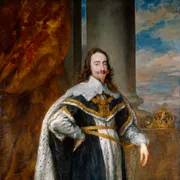
James died at Theobalds on 27 March 1625 and was succeeded by his son Charles I. In his reign England founded its first permanent colony in North America, Jamestown, and began the large-scale plantation of Ulster in Ireland. A Frenchman called him “the wisest fool in Christendom”: learned and perceptive, but lacking the art of winning men. His insistence on royal power, passed on to his son, led in the end to civil war.