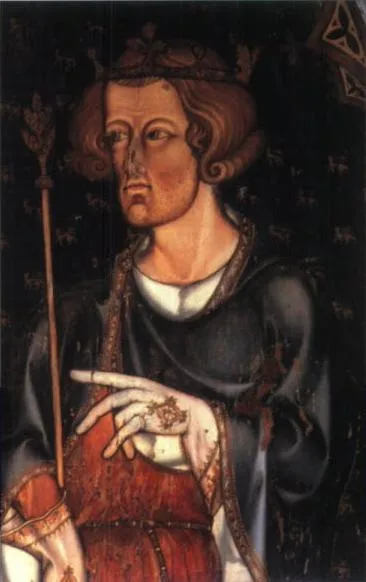
Edward I

House of Plantagenet

Edward I

愛德華一世Edward Longshanks

“Longshanks”

Born
17 June 1239, Westminster
Died
7 July 1307, Burgh by Sands

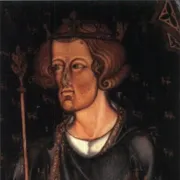
The tall "Longshanks". He conquered Wales and built castles such as Caernarfon, tried to conquer Scotland — earning the name "Hammer of the Scots" — and summoned Parliament often to pass a string of statutes. He died in 1307 on campaign against Scotland.

A Prince in the Barons’ War

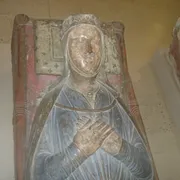
Edward was born at Westminster on 17 June 1239, the son of Henry III and Eleanor of Provence. His father revered Edward the Confessor and named his eldest son after the saint-king. Edward grew a head taller than most men of his time, and later generations called him “Longshanks”. In 1254, aged fifteen, he married Eleanor of Castile at Burgos in Spain; their marriage lasted thirty-six years and was a deeply affectionate one.

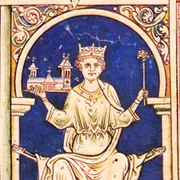
Henry III governed badly, and the barons rose against him under Simon de Montfort. In 1264 Edward and his father were defeated at the Battle of Lewes and Edward was held hostage; the next year he escaped and defeated and killed de Montfort at Evesham. The war taught the young Edward that a king had to be strong, but also had to win the support of his barons and people.

Crusade and Accession

In 1270 Edward set out on crusade. At Acre in 1272 an assassin stabbed him with a poisoned dagger; he survived, but was badly hurt. Henry III died that November while Edward was still abroad, yet Edward became king at once — a sign that succession by the eldest son was now settled. He dealt with his affairs in France on the way home and was not crowned until 1274.

The Lawgiver

Edward summoned Parliament often, and over his thirty-five-year reign passed a great body of statutes reforming land law, trade and justice; later writers called him “the English Justinian”. He sent officials to ask by what right the barons held their courts and franchises, and recovered many royal rights. In 1295, needing money for war, he summoned a Parliament that included representatives of the shires and towns as well as lords and bishops — later known as the “Model Parliament”.

Edward had a cruel side too. In 1290 he ordered the expulsion of every Jew in England and seized their property; Jews were not allowed back until the time of Cromwell, more than 360 years later.

The Conquest of Wales

Thirteenth-century Wales was ruled by native princes. When Llywelyn ap Gruffudd refused homage, Edward invaded in 1277 and again in 1282; Llywelyn was killed in 1282 and Wales came under English rule. The Statute of Rhuddlan of 1284 brought Wales into the English system of administration and law.

To hold the country Edward built a chain of mighty castles across North Wales — Caernarfon, Conwy, Harlech and Beaumaris among them, now a World Heritage Site. In 1284 his son was born at Caernarfon Castle, and in 1301 Edward made him Prince of Wales — the future Edward II. Most eldest sons of English and British monarchs have held the title since.

The Eleanor Crosses

In November 1290 Queen Eleanor died near Lincoln. Edward was heartbroken and ordered a stone cross raised at every place where her body rested overnight on its way from Lincoln to Westminster Abbey — twelve in all. Only three of the originals survive; the cross outside Charing Cross station in London is a nineteenth-century replica. In 1299, to make peace with France, Edward married Margaret, sister of Philip IV of France.

Hammer of the Scots

In 1290 the heir to the Scottish throne, Margaret, the “Maid of Norway”, died, leaving Scotland without an obvious king. The Scottish lords asked Edward to arbitrate; he chose John Balliol, but demanded that Balliol recognise English overlordship. When Balliol defied him in 1296, Edward marched north, sacked Berwick, deposed Balliol and carried the Stone of Scone, on which Scottish kings were made, to Westminster Abbey.

The Scots would not submit. In 1297 William Wallace defeated the English at Stirling Bridge; Edward won at Falkirk the next year, and in 1305 Wallace was captured and executed in London. In 1306 Robert the Bruce made himself King of Scots as Robert I. Edward, now nearly seventy, marched north once more, and died at Burgh by Sands, near the Scottish border, on 7 July 1307.

Legacy

Edward I was buried in Westminster Abbey; in the sixteenth century the Latin words “Hammer of the Scots” were added to his tomb. He was a shrewd lawmaker and soldier, and a ruthless conqueror. He conquered Wales but not Scotland: his son Edward II was routed at Bannockburn in 1314, and Scotland kept its independence. Parliament, the title Prince of Wales and the castles of Wales are all part of his legacy.
Matrimonium

Marriages & Children

Marriage 1

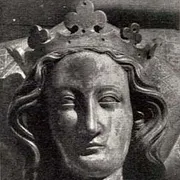
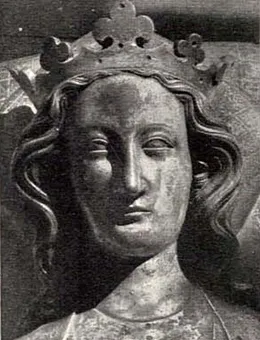
Eleanor of Castile

1241–1290◆Married 1 November 1254, Burgos

The couple had at least fourteen children, most of whom died young; Edward II was the only son to survive.

Children

  • Edward II 1284–1327
  • Eleanor, Countess of Bar
  • Joan of Acre
  • Margaret, Duchess of Brabant

Stemma

Family Tree

Parents, grandparents, spouses and descendants. Gold frames mark monarchs of England or Britain; diamonds mark marriages, with the year alongside. Select a person to open their entry.

John1166–1216
Henry III1207–1272
Edward I1239–1307
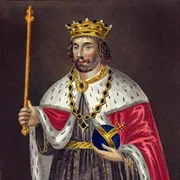
Edward II1284–1327
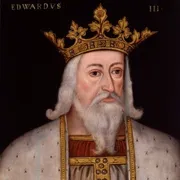
Edward III1312–1377
1254
1308
1236
1200

Imperium

The Changing Map

LondonYorkDublinEdinburghRouenParisAngersPoitiersBordeauxCalaisCardiff118912591360
  • Kingdom of England
  • Angevin lands in France
  • Brittany (vassal) and the Lordship of Ireland
  • Welsh principalities
  • Kingdom of Scotland
  • Kingdom of England
  • Gascony
  • Angevin lands lost
  • Lordship of Ireland (English-held)
  • Welsh principalities
  • Kingdom of Scotland
  • England and Wales
  • English crown lands in France
  • Former Angevin lands still French
  • Lordship of Ireland (English-held)
  • Kingdom of Scotland

Borders are indicative only, approximated from modern administrative regions.

  1. 1189

    1189: The Angevin Empire

    Henry II inherited Normandy and Anjou from his father and gained Aquitaine through his wife Eleanor, ruling lands from the Scottish border to the Pyrenees — more than the King of France himself held directly. In 1171 he went to Ireland to receive the submission of its lords.

  2. 1259

    1259: Only Gascony remains

    King John lost Normandy and Anjou in 1204. In the Treaty of Paris of 1259 Henry III formally gave them up, keeping only Gascony in the south-west, for which he did homage to the King of France as Duke of Aquitaine.

  3. 1360

    1360: The high point of the Hundred Years' War

    Edward I conquered Wales in 1284. After Edward III's victories at Crécy and Poitiers, the Treaty of Brétigny in 1360 gave England an enlarged Aquitaine, Calais and Ponthieu in full sovereignty, in return for which he set aside his claim to the French throne.

Chronica

Chronology

  1. 12843 March 1284

    Statute of Rhuddlan

    After the death of Llywelyn, Prince of Wales, Edward I's Statute of Rhuddlan brought Wales under English rule, secured by a ring of castles such as Caernarfon.

Examen

Quiz

  1. 01What title did Edward I give in 1301 to his son born at Caernarfon?

  2. 02Why did Edward I raise twelve crosses between Lincoln and Westminster?

  3. 03What did Edward I carry off from Scotland to Westminster in 1296?

  4. 04What name was later given to the Parliament Edward I summoned in 1295?

Further Reading

  • Morris, Marc. A Great and Terrible King: Edward I and the Forging of Britain. London: Hutchinson, 2008.
  • Powicke, F. M. The Thirteenth Century, 1216–1307. 2nd ed. Oxford: Clarendon Press, 1962.
  • Prestwich, Michael. Edward I. Berkeley: University of California Press, 1988.

Image Credits

  • Edward I — Remiguis Goebel, between 1272 and 1307. Wikimedia Commons, Public domain.
  • Edward II — Founder of Oriel College, after a painting in the Bodleian Library (colour engraving) by English School (19th century), 19th century. Wikimedia Commons, Public domain.
  • Edward III — TheAncientHistorian, 1587-01-30. Wikimedia Commons, Public domain.
  • Eleanor of Castile — History England Westminster abbey Souvenir book, 2011-09-14. Wikimedia Commons, CC0.
  • Eleanor of Provence — Matthew Paris, 13th century. Wikimedia Commons, Public domain.
  • Henry III — Matthew Paris, 13th century. Wikimedia Commons, Public domain.
  • Isabella of Angoulême — UAltmann, 2006-10-28. Wikimedia Commons, Public domain.
  • Isabella of France — Loyset Liédet, 3 May 2020. Wikimedia Commons, Public domain.
  • John — Unknown author, 14th century. Wikimedia Commons, CC0.
  • Dürer, Triumphal Arch — Unknown embroiderers (Bayeux Tapestry), 2011-10-27. Wikimedia Commons, Public domain.