George III

House of Hanover

George III

喬治三世George William Frederick

Born
4 June 1738, London
Died
29 January 1820, Windsor Castle

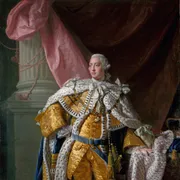
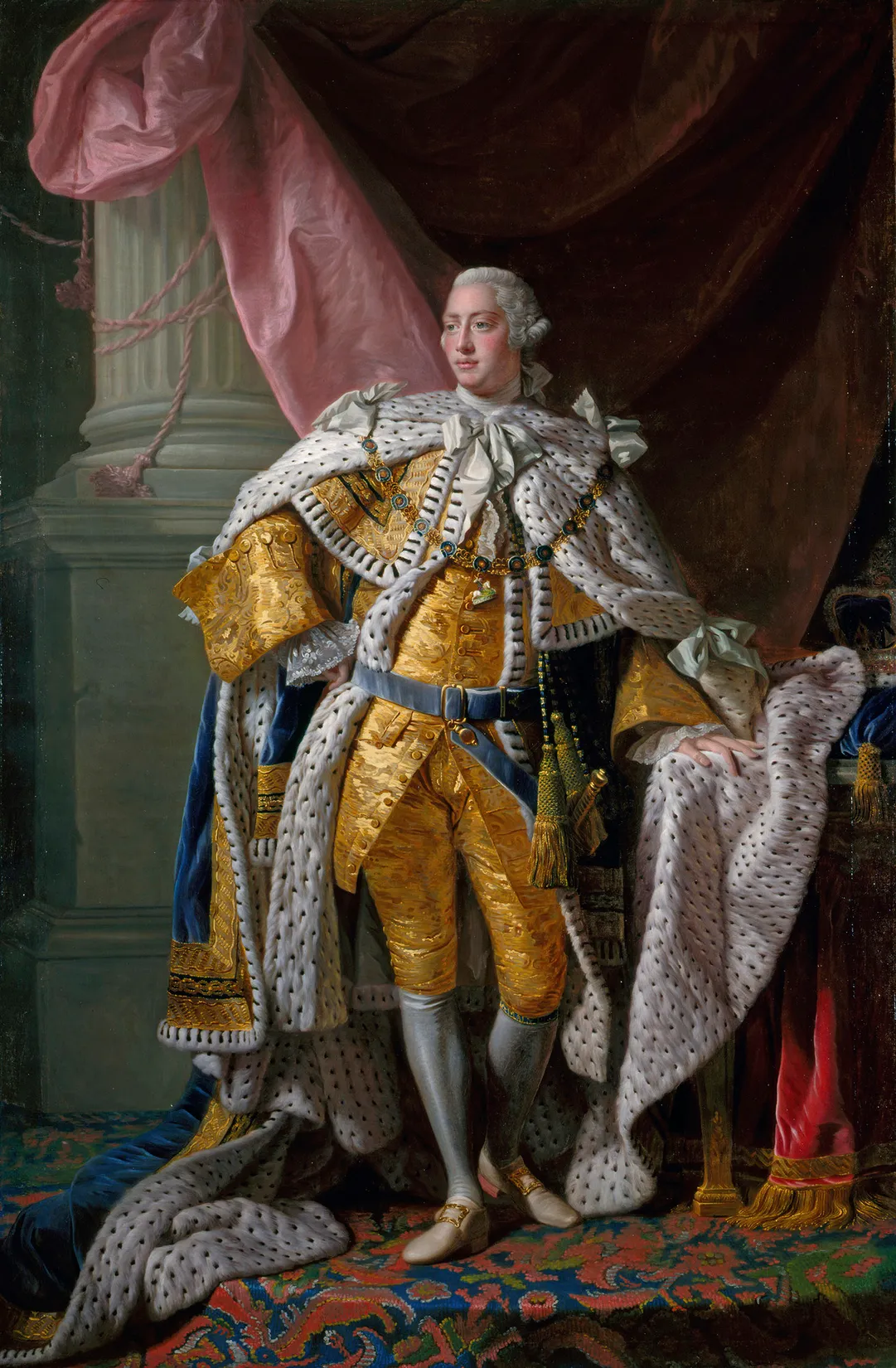
The first Hanoverian born in Britain with English as his first language, he reigned for sixty years. Britain lost its American colonies but defeated Napoleon, and he sent the Macartney embassy to Qing China. Mental illness clouded his last years, and his son ruled as Regent.

A King Born in Britain

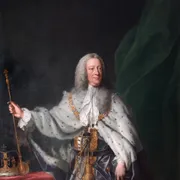
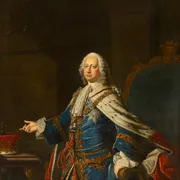
George was born in London on 4 June 1738, the eldest son of Frederick, Prince of Wales, and grandson of George II. His grandfather and great-grandfather had been born in Germany and spoke English with heavy accents; George was the first Hanoverian born in Britain with English as his first language. His father died suddenly in 1751, making the twelve-year-old George heir, and when his grandfather died in 1760 he became king at twenty-two. In his first speech to Parliament he declared: “Born and educated in this country, I glory in the name of Britain.”

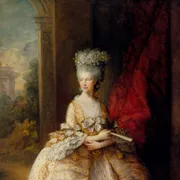
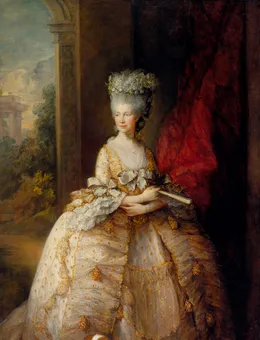
The next year he married the German princess Charlotte. They met for the first time on their wedding day, but the marriage was a happy one and they had fifteen children. Unlike his predecessors, George never took a mistress.

The Loss of America

George came to the throne in the midst of the Seven Years’ War with France. The Treaty of Paris of 1763 gave Britain Canada and the upper hand in India, and the empire stood at a new height. But the war had swollen the national debt, and the government decided to tax the American colonies. The Stamp Act of 1765 provoked fierce resistance under the slogan “No taxation without representation”.

After the Boston Tea Party of 1773 the conflict turned to war. On 4 July 1776 thirteen colonies issued the Declaration of Independence, which denounced George III as a tyrant. Britain lost the war and recognised American independence in the Treaty of Paris of 1783. George drafted a message of abdication but never sent it. That same year he appointed the twenty-four-year-old William Pitt the Younger as prime minister.

Farmer George

George lived simply and loved farming; he ran a model farm at Windsor and even wrote for an agricultural journal under a pen name, earning the nickname “Farmer George”. He was a keen patron of culture and science: in 1768 he founded the Royal Academy of Arts, his library of more than sixty thousand books was later given to the nation by his son and forms the core of today’s British Library, and he was fascinated by astronomy and clocks.

In 1793 he sent Lord Macartney to China with gifts of scientific instruments, clocks and guns, hoping to expand trade. The Qianlong Emperor received the embassy at Rehe but replied that the Celestial Empire “possesses all things in prolific abundance”, and refused every British request.

The King’s Madness

In 1788 George was struck by a severe mental illness: he talked incoherently and at times had to be restrained in a strait-waistcoat. He recovered after some months, but the illness returned several times. In 1811 he lost his reason for good, and his son the Prince of Wales became Prince Regent. Blind and deaf in his last years, George lived in seclusion at Windsor Castle and died on 29 January 1820 after fifty-nine years on the throne — the longest reign of any British king.

The cause of his illness is still debated. In the twentieth century the theory that he suffered from porphyria became popular, but many medical historians now think a psychiatric illness such as bipolar disorder more likely.

Reputation

Nineteenth-century Whig historians and Americans painted George III as a tyrant bent on expanding royal power. Recent historians are more balanced, noting that he respected the constitution, worked hard at government, and that his firm line on America had the support of Parliament and most of the British public. His reign saw the loss of America — but also the defeat of Napoleon and the beginning of the Industrial Revolution.

Matrimonium

Marriages & Children

Stemma

Family Tree

Parents, grandparents, spouses and descendants. Gold frames mark monarchs of England or Britain; diamonds mark marriages, with the year alongside. Select a person to open their entry.

Imperium

The Changing Map

LondonEdinburghDublinHanoverParisBelfast17141801
  • Kingdom of Great Britain
  • Ireland and Hanover, under the same monarch
  • United Kingdom of Great Britain and Ireland
  • Hanover (same monarch)

Borders are indicative only, approximated from modern administrative regions.

  1. 1714

    1714: The Hanoverian union

    George I inherited the British throne while remaining Elector of Hanover in Germany. For over 120 years Britain and Hanover shared a monarch, often drawing Britain into Continental wars.

  2. 1801

    1801: The United Kingdom

    After the Irish rebellion of 1798, the Act of Union of 1800 joined Great Britain and Ireland as the United Kingdom of Great Britain and Ireland. The Irish Parliament was abolished and Irish members sat at Westminster; St Patrick's cross was added to the Union Flag.

Chronica

Chronology

  1. 17764 July 1776

    American Declaration of Independence

    Thirteen American colonies declared independence from Britain, which recognised the United States in the Treaty of Paris of 1783.

  2. 179314 September 1793

    The Macartney embassy meets the Qianlong Emperor

    Lord Macartney, sent by George III, was received by the Qianlong Emperor at Rehe; his requests for wider trade and a resident envoy were refused. It was Britain's first official embassy to China.

  3. 18011 January 1801

    Union with Ireland

    Great Britain and Ireland were united in the United Kingdom, and the Union Flag gained the cross of St Patrick.

  4. 180521 October 1805

    Battle of Trafalgar

    Nelson's fleet destroyed the combined French and Spanish fleets, though Nelson himself was killed. British command of the sea was assured.

  5. 18115 February 1811

    The Regency begins

    George III's mental illness made his son George, Prince of Wales, Prince Regent until he succeeded in 1820.

Examen

Quiz

  1. 01How did George III differ from the first two Hanoverian kings?

  2. 02What slogan did the American colonists use against British taxation?

  3. 03Who led the embassy George III sent to China in 1793?

  4. 04Who ruled as Regent during George III's final illness?

Further Reading

  • Brooke, John. King George III. London: Constable, 1972.
  • Roberts, Andrew. The Last King of America: The Misunderstood Reign of George III. London: Allen Lane, 2021.
  • Peters, Timothy J., and D. Wilkinson. "King George III and Porphyria: A Clinical Re-examination of the Historical Evidence." History of Psychiatry 21, no. 1 (2010): 3–19.

Image Credits

  • Caroline of Ansbach — Jacopo Amigoni, 1735. Wikimedia Commons, Public domain.
  • Caroline of Brunswick — Thomas Lawrence, 1804. Wikimedia Commons, Public domain.
  • Charlotte of Mecklenburg-Strelitz — Thomas Gainsborough, 1781. Wikimedia Commons, Public domain.
  • Frederick, Prince of Wales — Thomas Hudson, 1750. Wikimedia Commons, Public domain.
  • George II — John Shackleton, 1758. Wikimedia Commons, Public domain.
  • George III — Allan Ramsay, between circa 1761 and circa 1762. Wikimedia Commons, Public domain.
  • George IV — Thomas Lawrence, 1821. Wikimedia Commons, Public domain.
  • Prince Edward, Duke of Kent — William Beechey, 1818. Wikimedia Commons, Public domain.
  • Princess Charlotte of Wales — George Dawe, 1817. Wikimedia Commons, Public domain.
  • Queen Victoria — Alexander Bassano, 1882. Wikimedia Commons, Public domain.
  • Victoria, Duchess of Kent — Richard Rothwell, 1832. Wikimedia Commons, Public domain.
  • William IV — Martin Archer Shee, between 1833 and 1834. Wikimedia Commons, Public domain.
  • Dürer, Triumphal Arch — Unknown embroiderers (Bayeux Tapestry), 2011-10-27. Wikimedia Commons, Public domain.