Henry VIII

House of Tudor

Henry VIII

亨利八世

Born
28 June 1491, Greenwich
Died
28 January 1547, Whitehall Palace

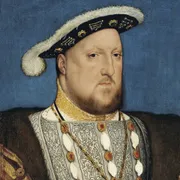
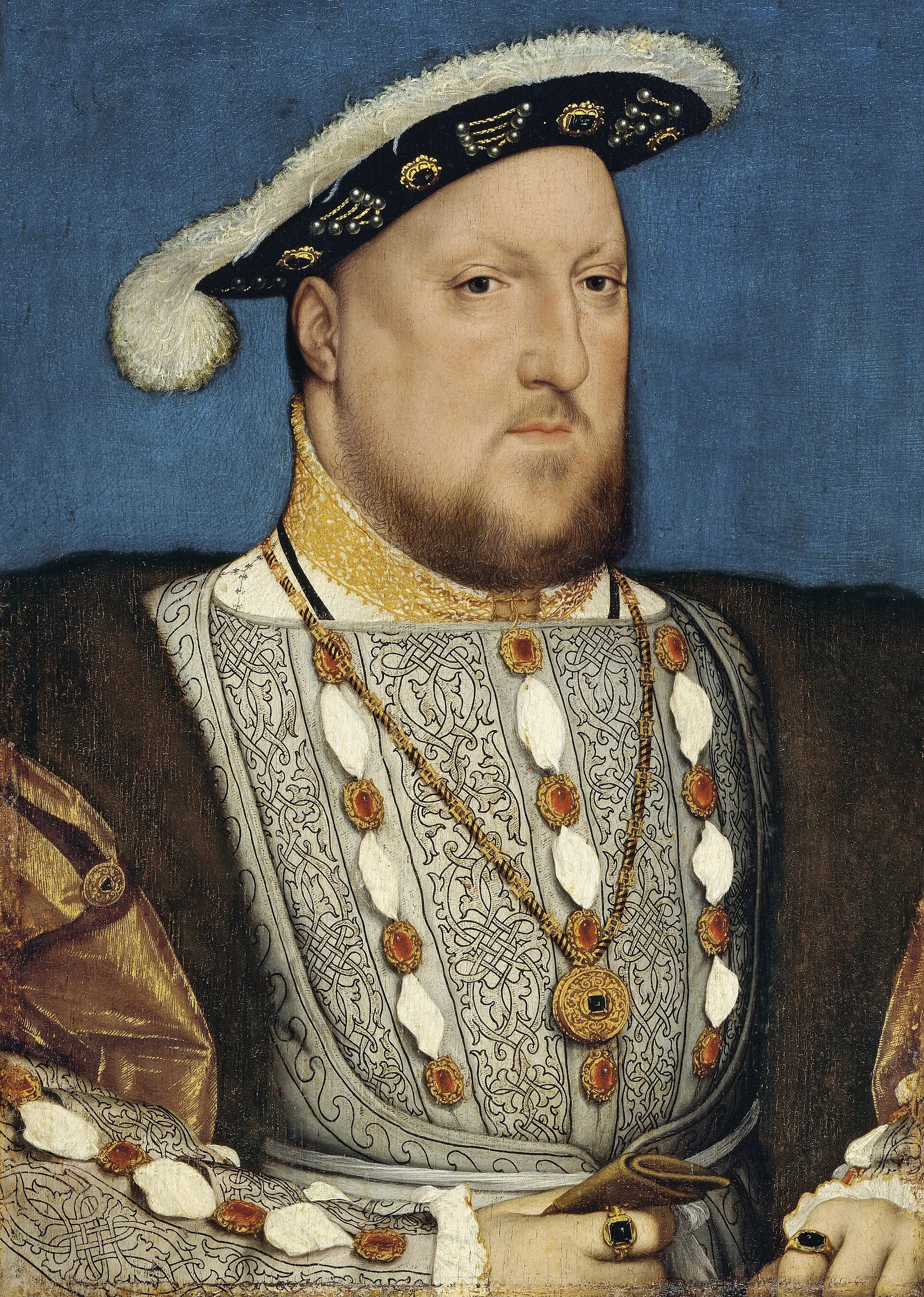
The king of six wives. To divorce Catherine of Aragon he broke with Rome, made himself Supreme Head of the Church of England in 1534 and dissolved the monasteries. Two of his queens were executed, and all three of his children reigned after him.

A Renaissance Prince

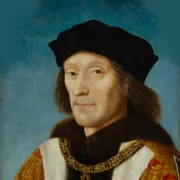
Henry was born at Greenwich, south-east of London, on 28 June 1491, the second son of Henry VII. With his elder brother Arthur as heir, Henry was given a fine education, spoke Latin and French, and excelled at music, composition and every kind of sport. When Arthur died in 1502, the ten-year-old Henry became heir.

When his father died in 1509 the seventeen-year-old Henry succeeded and promptly married his brother’s widow, Catherine of Aragon. Tall, handsome and athletic, a passionate jouster, the young king seemed the very model of a Renaissance prince. In 1521 he wrote a treatise against Martin Luther, and the pope rewarded him with the title “Defender of the Faith”. British monarchs still use it, and the letters “F D” on British coins come from it.

The King’s Great Matter

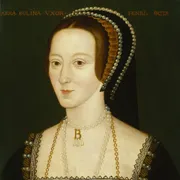
Catherine bore several children, but only a daughter, Mary, survived. Henry was convinced he needed a son to avoid another civil war like the Wars of the Roses, and he cited the Book of Leviticus to argue that marrying his brother’s widow had offended God and cost him a son. By now he had fallen in love with Anne Boleyn, a lady of the court.

Henry asked the pope to annul the marriage, but the pope, under pressure from Catherine’s nephew the Emperor Charles V, delayed. Cardinal Wolsey, Henry’s chief minister, fell from power for his failure, and Thomas Cromwell took over. In 1533 the new Archbishop of Canterbury, Thomas Cranmer, declared Henry’s first marriage void, and Henry married the already pregnant Anne.

The Break with Rome

In 1534 Parliament passed the Act of Supremacy, declaring the king Supreme Head of the Church of England. The former Lord Chancellor Thomas More and Bishop John Fisher of Rochester refused the oath and were executed. Between 1536 and 1541 Henry dissolved some eight hundred monasteries, taking their lands and wealth for the crown and selling much of it on to nobles and gentry. A northern protest, the Pilgrimage of Grace, was crushed.

In doctrine Henry himself remained fairly conservative, and the Church of England did not become fully Protestant in his reign. But the break with Rome and the dissolution of the monasteries changed English religion and society for good.

Six Wives

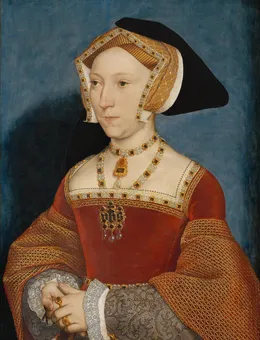
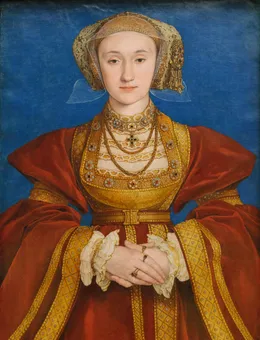
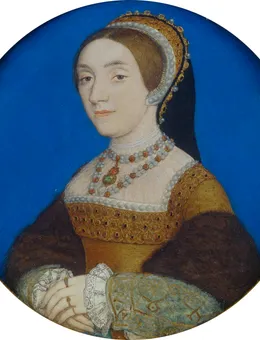
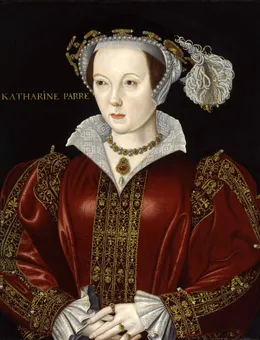
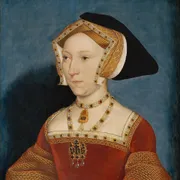
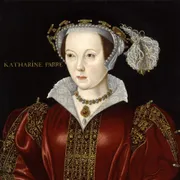
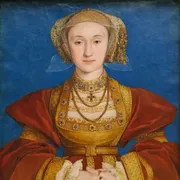
English schoolchildren remember the fate of Henry’s wives with the rhyme “divorced, beheaded, died; divorced, beheaded, survived”. Anne Boleyn bore only a daughter, Elizabeth, and was beheaded in 1536 on charges of adultery and treason; his third wife, Jane Seymour, gave him a son, Edward, and died two weeks later; his fourth, Anne of Cleves, was divorced soon after they met; the young fifth, Catherine Howard, was executed for adultery; and the sixth, Catherine Parr, outlived him.

The Navy and the Last Years

Henry greatly expanded the navy, building dockyards and great warships. His flagship, the Mary Rose, sank in 1545 while fighting the French; she was raised in 1982 and is now displayed in a museum at Portsmouth.

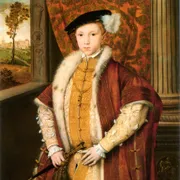
In 1536 Henry was thrown from his horse while jousting, and the wound in his leg never properly healed. In his last years he grew hugely fat, irritable and suspicious; even his great minister Cromwell was executed in 1540. Henry died at Whitehall Palace on 28 January 1547, aged fifty-five. As he had arranged, his son Edward VI and his daughters Mary I and Elizabeth I reigned in turn.
Matrimonium

Marriages & Children

Marriage 1

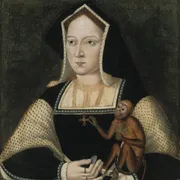
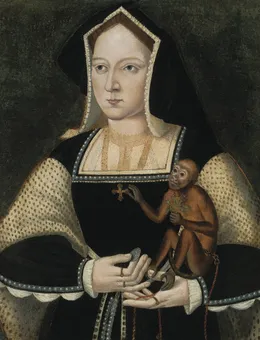
Catherine of Aragon

1485–1536◆Married 11 June 1509, Greenwich

Annulled in 1533 by Archbishop Cranmer; the pope refused to recognise the annulment, and England broke with Rome.

Children

Marriage 2

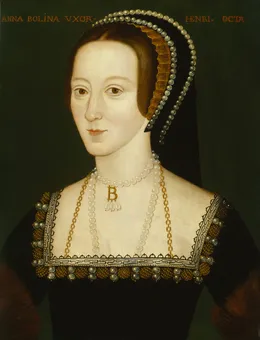
Anne Boleyn

1501–1536◆Married 25 January 1533, Whitehall

A secret wedding. In 1536 Anne was executed and the marriage declared void.

Children

Marriage 4

Anne of Cleves

1515–1557◆Married 6 January 1540, Greenwich

Annulled six months later as unconsummated.

Children

No children

Marriage 5

Catherine Howard

1523–1542◆Married 28 July 1540, Oatlands Palace

Children

No children

Marriage 6

Catherine Parr

1512–1548◆Married 12 July 1543, Hampton Court Palace

Children

No children

Stemma

Family Tree

Parents, grandparents, spouses and descendants. Gold frames mark monarchs of England or Britain; diamonds mark marriages, with the year alongside. Select a person to open their entry.

Edmund Tudor1430–1456
Edward IV1442–1483
Henry VII1457–1509
Henry VIII1491–1547
Anne Boleyn1501–1536
Jane Seymour1508–1537
Catherine Parr1512–1548
Anne of Cleves1515–1557
Mary I1516–1558
Catherine Howard1523–1542
Elizabeth I1533–1603
Edward VI1537–1553
1455
1464
1486
1533
1540
1540
1509
1543
1536
1554

Imperium

The Changing Map

LondonYorkDublinEdinburghStirlingCalaisBelfast15421603
  • England and Wales
  • Calais
  • Kingdom of Ireland (crown-controlled)
  • Gaelic Ireland
  • Kingdom of Scotland
  • England and Wales
  • Scotland and Ireland, under the same monarch
  • Calais (lost 1558)

Borders are indicative only, approximated from modern administrative regions.

  1. 1542

    1542: The Kingdom of Ireland

    Henry VIII's Laws in Wales Acts of 1535 and 1542 formally annexed Wales to England, and in 1542 he made himself King of Ireland — though effective English control there was still largely limited to the Pale and the south-east. In France only Calais remained.

  2. 1603

    1603: Three kingdoms, one monarch

    Mary I lost Calais in 1558. At the end of Elizabeth I's reign the rebellion in northern Ireland was crushed, bringing all Ireland under the crown for the first time. When she died in 1603 James VI of Scotland succeeded, and England, Scotland and Ireland came to share one monarch.

Chronica

Chronology

  1. 150911 June 1509

    Henry VIII marries Catherine of Aragon

    Soon after his accession the seventeen-year-old Henry VIII married his brother Arthur's widow, with a papal dispensation.

  2. 1534November 1534

    Act of Supremacy

    Parliament declared the king Supreme Head of the Church of England, completing the break with Rome. Thomas More, who refused the oath, was executed the next year.

  3. 1536

    Dissolution of the monasteries

    Between 1536 and 1541 Henry VIII closed some eight hundred monasteries and seized their lands and wealth, most of which were sold on to nobles and gentry.

  4. 153619 May 1536

    Execution of Anne Boleyn

    Accused of adultery and treason, Anne Boleyn was beheaded in the Tower; her daughter Elizabeth was two years old.

Examen

Quiz

  1. 01Why did the pope give the young Henry VIII the title "Defender of the Faith"?

  2. 02What did the Act of Supremacy of 1534 declare?

  3. 03In "divorced, beheaded, died; divorced, beheaded, survived", who is the one who "died"?

  4. 04What was Henry VIII's flagship, raised from the seabed in 1982?

Further Reading

  • Scarisbrick, J. J. Henry VIII. London: Eyre & Spottiswoode, 1968.
  • Starkey, David. Six Wives: The Queens of Henry VIII. London: Chatto & Windus, 2003.
  • MacCulloch, Diarmaid. Thomas Cromwell: A Life. London: Allen Lane, 2018.

Image Credits

  • Anne Boleyn — Unknown author, between 1584 and 1603. Wikimedia Commons, Public domain.
  • Anne of Cleves — Hans Holbein the Younger, 1539. Wikimedia Commons, Public domain.
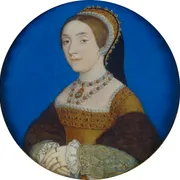
  • Catherine Howard — Hans Holbein the Younger, 1540. Wikimedia Commons, Public domain.
  • Catherine of Aragon — Lucas Horenbout, 1525 2018-04-22. Wikimedia Commons, Public domain.
  • Catherine Parr — anonymous, 1545. Wikimedia Commons, Public domain.
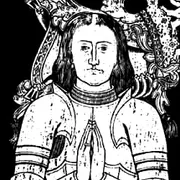
  • Edmund Tudor — Unknown author, circa 1456. Wikimedia Commons, Public domain.
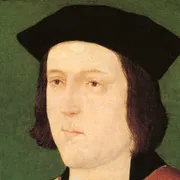
  • Edward IV — anonymous, 1540. Wikimedia Commons, Public domain.
  • Edward VI — Attributed to William Scrots (active 1537-1553) [1], circa 1546. Wikimedia Commons, Public domain.
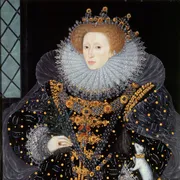
  • Elizabeth I — Attributed to William Segar / Attributed to George Gower / Formerly attributed to Nicholas Hilliard, circa 1585. Wikimedia Commons, Public domain.
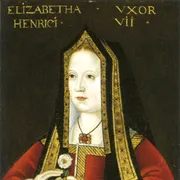
  • Elizabeth of York — anonymous, late 16th century. Wikimedia Commons, Public domain.
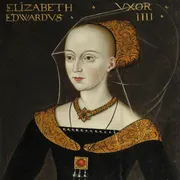
  • Elizabeth Woodville — Unknown author, after 1500. Wikimedia Commons, Public domain.
  • Henry VII — anonymous, 1505. Wikimedia Commons, Public domain.
  • Henry VIII — Hans Holbein the Younger, 1537. Wikimedia Commons, Public domain.
  • Jane Seymour — Hans Holbein the Younger, between 1536 and 1537. Wikimedia Commons, Public domain.
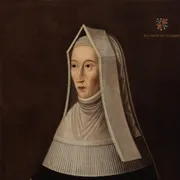
  • Margaret Beaufort — Unidentified painter, between 1650 and 1700. Wikimedia Commons, Public domain.
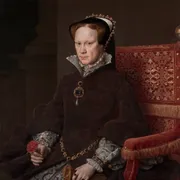
  • Mary I — Antonis Mor, 1554. Wikimedia Commons, Public domain.
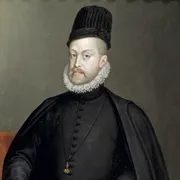
  • Philip II of Spain — Sofonisba Anguissola, 1565. Wikimedia Commons, Public domain.
  • Dürer, Triumphal Arch — Unknown embroiderers (Bayeux Tapestry), 2011-10-27. Wikimedia Commons, Public domain.