Elizabeth I

House of Tudor

Elizabeth I

伊莉莎白一世Elizabeth Tudor

“the Virgin Queen”

Born
7 September 1533, Greenwich
Died
24 March 1603, Richmond Palace

Anne Boleyn's daughter, who lost her mother to the executioner at two. In forty-five years on the throne she settled the Church of England, saw off the Spanish Armada in 1588 and presided over the age of Shakespeare. She never married — "the Virgin Queen" — and with her the Tudor dynasty ended.

An Unwelcome Princess

Elizabeth was born at Greenwich Palace on 7 September 1533. Her father Henry VIII had broken with Rome to marry her mother Anne Boleyn in the hope of a son — and Anne gave him a daughter. When Elizabeth was two her mother was beheaded, and she was declared illegitimate and lost her title of princess.

In the care of her stepmother Catherine Parr she received a superb education, mastering Latin, Greek, French and Italian; her tutor Roger Ascham praised her quickness above that of any man. In 1554, under her sister Mary I, Wyatt’s Rebellion broke out, and the Protestant Elizabeth fell under suspicion and spent two months in the Tower of London, at times in danger of her life.

Accession and Religion

Mary I died on 17 November 1558 and the twenty-five-year-old Elizabeth succeeded. The next year her Acts of Supremacy and Uniformity made her “Supreme Governor” of the Church of England and imposed the English Book of Common Prayer for worship. The settlement was Protestant in doctrine but kept many Catholic traditions in its ceremonies — a middle way between Catholicism and radical Protestantism. She had no wish, she said, to “make windows into men’s souls”, asking only outward conformity.

The Virgin Queen

Parliament repeatedly begged the queen to marry and produce an heir, and suitors came in a steady stream: her former brother-in-law Philip II of Spain, the Habsburg Archduke Charles, the French Duke of Anjou and more. She was devoted to her favourite, Robert Dudley, but married no one. She used the prospect of marriage to play the powers off against each other, and presented herself as wedded to England — the “Virgin Queen” after whom the colony of Virginia was named.

Mary, Queen of Scots, and the Armada

In 1568 Mary, Queen of Scots, fled to England. As a great-granddaughter of Henry VII she was Elizabeth’s heir, and to English Catholics the rightful queen, so she became the focus of plot after plot. Elizabeth kept her captive for nineteen years until, in 1587, Mary’s part in an assassination plot was uncovered and Elizabeth signed her death warrant.

In 1588 Philip II launched the Armada against England. Elizabeth went to review her troops at Tilbury and declared: “I know I have the body of a weak and feeble woman; but I have the heart and stomach of a king.” English fireships broke the Armada’s formation, and the surviving Spanish ships, sailing home around Scotland and Ireland, were wrecked in great numbers by storms.

The Elizabethan Age

Elizabeth’s reign saw an extraordinary flowering of English literature in Shakespeare, Spenser and Marlowe; Drake sailed around the world and Raleigh tried to plant colonies in North America; and in 1600 she chartered the East India Company. Her last years, however, brought financial strain, war in Ireland and the rebellion of her favourite, the Earl of Essex.

Elizabeth died at Richmond Palace on 24 March 1603, aged sixty-nine, after forty-five years on the throne. She had never married and left no children; the crown passed to Mary, Queen of Scots’s son, James VI of Scotland, and the Tudor dynasty came to an end.
Stemma

Family Tree

Parents, grandparents, spouses and descendants. Gold frames mark monarchs of England or Britain; diamonds mark marriages, with the year alongside. Select a person to open their entry.

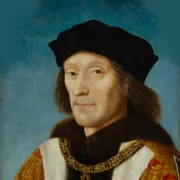
Henry VII1457–1509
Henry VIII1491–1547
Anne Boleyn1501–1536
Elizabeth I1533–1603
1486
1533

Imperium

The Changing Map

LondonYorkDublinEdinburghStirlingCalaisBelfast15421603
  • England and Wales
  • Calais
  • Kingdom of Ireland (crown-controlled)
  • Gaelic Ireland
  • Kingdom of Scotland
  • England and Wales
  • Scotland and Ireland, under the same monarch
  • Calais (lost 1558)

Borders are indicative only, approximated from modern administrative regions.

  1. 1542

    1542: The Kingdom of Ireland

    Henry VIII's Laws in Wales Acts of 1535 and 1542 formally annexed Wales to England, and in 1542 he made himself King of Ireland — though effective English control there was still largely limited to the Pale and the south-east. In France only Calais remained.

  2. 1603

    1603: Three kingdoms, one monarch

    Mary I lost Calais in 1558. At the end of Elizabeth I's reign the rebellion in northern Ireland was crushed, bringing all Ireland under the crown for the first time. When she died in 1603 James VI of Scotland succeeded, and England, Scotland and Ireland came to share one monarch.

Chronica

Chronology

  1. 153619 May 1536

    Execution of Anne Boleyn

    Accused of adultery and treason, Anne Boleyn was beheaded in the Tower; her daughter Elizabeth was two years old.

  2. 158026 September 1580

    Drake returns from circumnavigating the globe

    Francis Drake returned in the Golden Hind from the second voyage around the world, laden with Spanish treasure, and was knighted by Elizabeth I the next year.

  3. 15878 February 1587

    Execution of Mary, Queen of Scots

    Implicated in a plot to assassinate Elizabeth I, Mary was beheaded at Fotheringhay — one of Spain's reasons for launching the Armada.

  4. 158829 July 1588

    Defeat of the Spanish Armada

    The English fleet mauled the Spanish Armada off Gravelines; the survivors sailed home around Scotland and Ireland and were wrecked in great numbers by storms.

  5. 160031 December 1600

    East India Company founded

    Elizabeth I chartered the East India Company with a monopoly of trade with Asia. It went on to rule India and, in the nineteenth century, to ship opium to China.

  6. 160324 March 1603

    Union of the Crowns

    Elizabeth I died and James VI of Scotland inherited England as James I. England and Scotland now shared a monarch but remained separate kingdoms.

Examen

Quiz

  1. 01Who was Elizabeth I's mother?

  2. 02Which of these was a suitor of Elizabeth I?

  3. 03Why did Elizabeth I review her troops at Tilbury?

  4. 04Who succeeded Elizabeth I?

Further Reading

  • MacCaffrey, Wallace. Elizabeth I. London: Edward Arnold, 1993.
  • Doran, Susan. Elizabeth I and Her Circle. Oxford: Oxford University Press, 2015.
  • Guy, John. Elizabeth: The Forgotten Years. London: Viking, 2016.

Image Credits

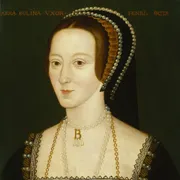
  • Anne Boleyn — Unknown author, between 1584 and 1603. Wikimedia Commons, Public domain.
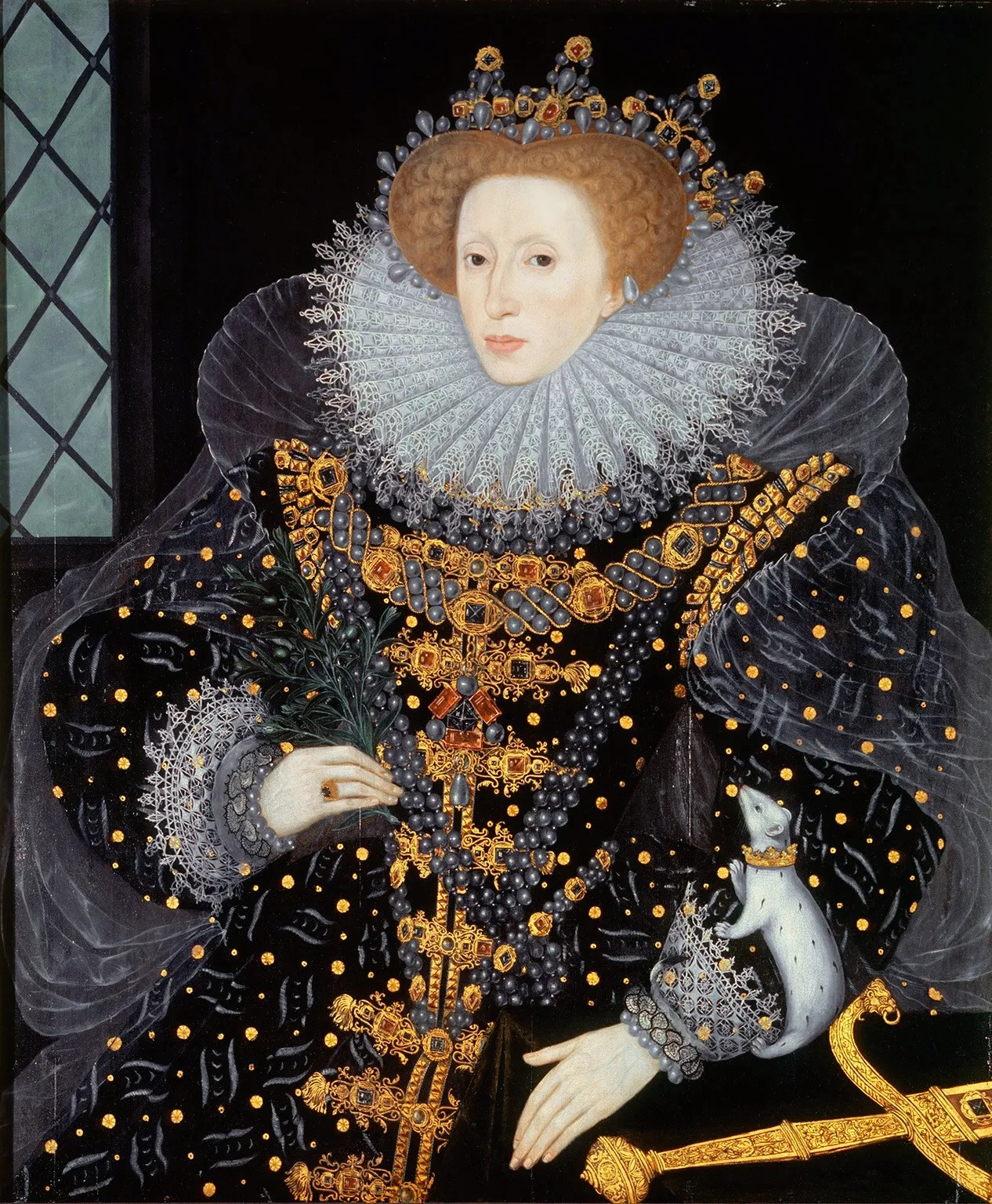
  • Elizabeth I — Attributed to William Segar / Attributed to George Gower / Formerly attributed to Nicholas Hilliard, circa 1585. Wikimedia Commons, Public domain.
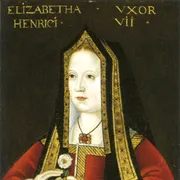
  • Elizabeth of York — anonymous, late 16th century. Wikimedia Commons, Public domain.
  • Henry VII — anonymous, 1505. Wikimedia Commons, Public domain.
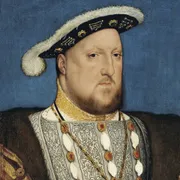
  • Henry VIII — Hans Holbein the Younger, 1537. Wikimedia Commons, Public domain.
  • Dürer, Triumphal Arch — Unknown embroiderers (Bayeux Tapestry), 2011-10-27. Wikimedia Commons, Public domain.