A Posthumous Son
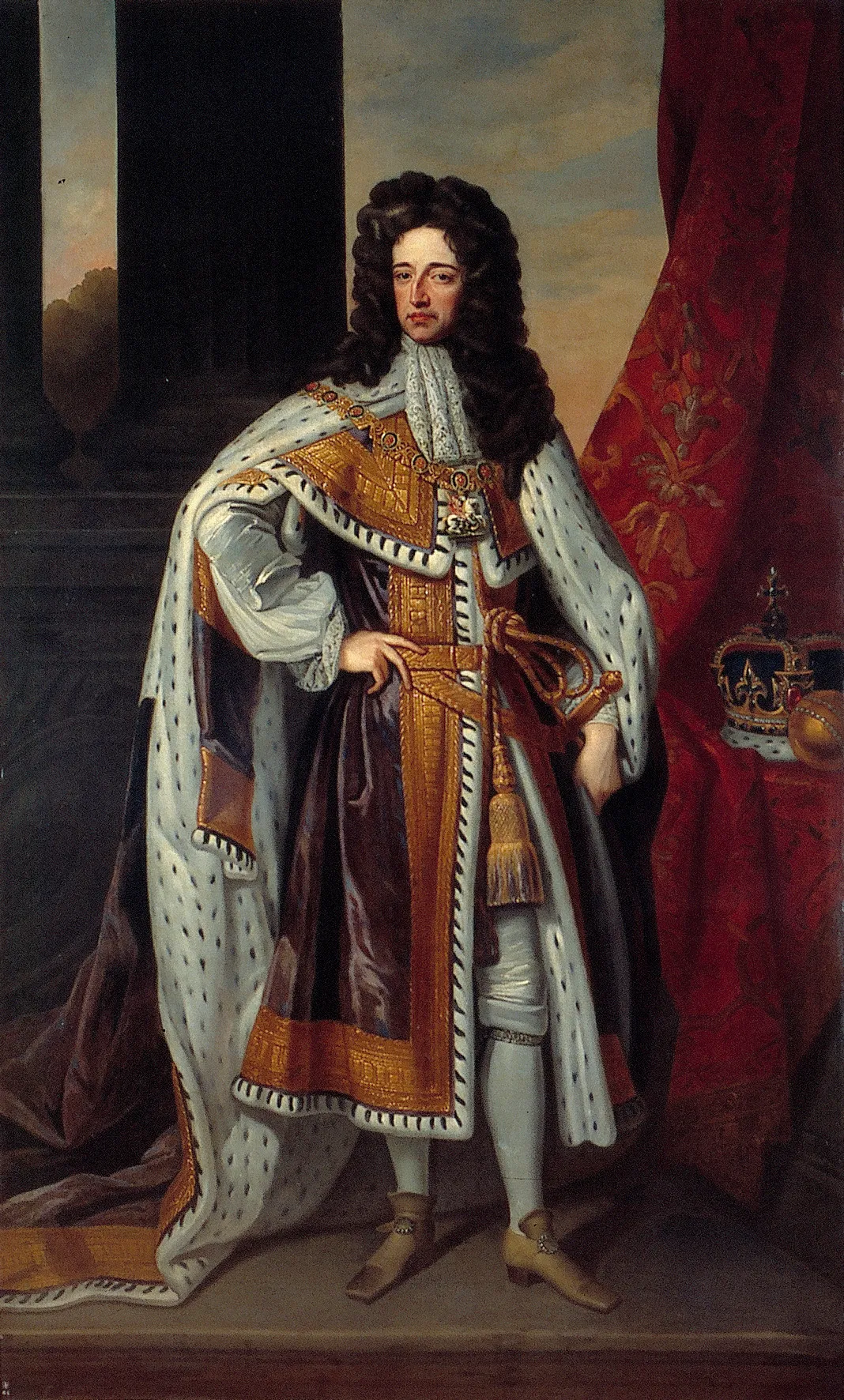
William was born at The Hague in November 1650. Eight days before his birth his father, William II, Prince of Orange, had died of smallpox; his mother, Mary, was the eldest daughter of Charles I of England. The princes of Orange had long served as stadtholders of the Dutch Republic, but the republican party then in power, wary of the House of Orange, left the office empty, and William grew up under the eye of his family’s enemies. He was a sickly, asthmatic child and grew into a reserved, silent man.
The Year of Disaster
In 1672 Louis XIV of France, together with England and two German prince-bishoprics, invaded the Netherlands — the Dutch remember it as the Rampjaar, the “year of disaster”. In the crisis the twenty-one-year-old William was made stadtholder and captain-general, while the republican leaders, the brothers Johan and Cornelis de Witt, were lynched by a mob in The Hague. William had the dykes opened, and the floodwaters held back the French and saved the Republic. From then on his life’s purpose was to resist Louis XIV.
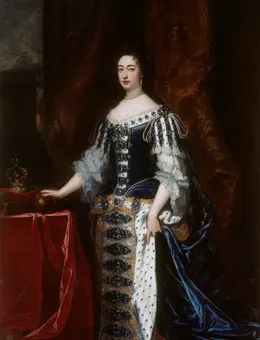
In 1677 William married his cousin Mary II, the Protestant elder daughter of James, Duke of York, the future James II. The fifteen-year-old Mary is said to have wept for a whole day on hearing the news. The marriage began coldly but grew into a real partnership, though they had no children.
The Glorious Revolution
In 1685 the Catholic James II came to the English throne and began to favour Catholics, alarming many of his subjects. In June 1688 his queen gave birth to a son, James Francis Edward Stuart, promising a Catholic dynasty. Seven leading Englishmen then wrote secretly to William, inviting him to intervene.
William saw his chance to bring England into the struggle against France. On 5 November 1688, carried by a favourable “Protestant wind”, he landed at Torbay in south-west England with more than four hundred ships and over ten thousand men. James’s officers deserted him one after another, even his daughter Anne went over to William, and James fled to France.
William made it clear that he would not be merely the queen’s husband. In February 1689 Parliament declared the throne vacant and offered the crown to William and Mary jointly, on condition that they accept the Declaration of Rights; they were crowned together that April. This almost bloodless coup became known as the Glorious Revolution.
The Boyne and Glencoe
James did not give up. With French support he landed in Ireland, and in July 1690 William led his army in person and defeated him at the Battle of the Boyne, north of Dublin; James fled to France once more. Protestants in Northern Ireland still call William “King Billy” and march every July to celebrate the victory.
In Scotland, Highland clans loyal to James took up arms. In 1692, on the pretext that the MacDonalds of Glencoe had been late in swearing allegiance, government troops massacred more than thirty of them. William had signed the orders behind it, and the massacre remains a stain on his reign.
Against Louis XIV
William poured England’s men and money into the war against France. The Nine Years’ War was enormously expensive, and in 1694 the government founded the Bank of England to borrow from the public, creating a permanent national debt — the financial system that would later allow Britain to fight war after war. By the Treaty of Ryswick in 1697 Louis XIV recognised William as King of England.
Parliament used the moment to strengthen its own position: the king now had to summon it every year to pass the money and army bills, and the Triennial Act of 1694 required a general election at least every three years. William disliked English party politics and quarrelled often with Parliament, but in the end accepted its limits.
Last Years
Mary died of smallpox in December 1694, leaving William grief-stricken; he reigned alone thereafter. With neither William nor Anne leaving surviving children, Parliament passed the Act of Settlement in 1701, naming Sophia of Hanover and her Protestant descendants as heirs to the throne.
In February 1702, riding at Hampton Court, William’s horse stumbled on a molehill; he broke his collarbone, developed pneumonia and died at Kensington Palace on 8 March. Jacobites ever after toasted “the little gentleman in the black velvet waistcoat” — the mole. The crown passed to his sister-in-law Anne. William was never much loved in England, but he brought Britain into the ranks of Europe’s great powers and laid the foundations of a monarchy governed with and through Parliament.