
Tea and Silver
In the eighteenth century tea became an everyday British habit, and almost all of it came from China. From 1757 the Qing allowed Western merchants to trade only at Canton, and only through the licensed Cohong merchants. The East India Company held the British monopoly on the China trade and bought vast quantities of tea, silk and porcelain each year, but China had little interest in British goods, so Britain had to pay in silver, and the trade deficit grew ever larger.
The Macartney Embassy
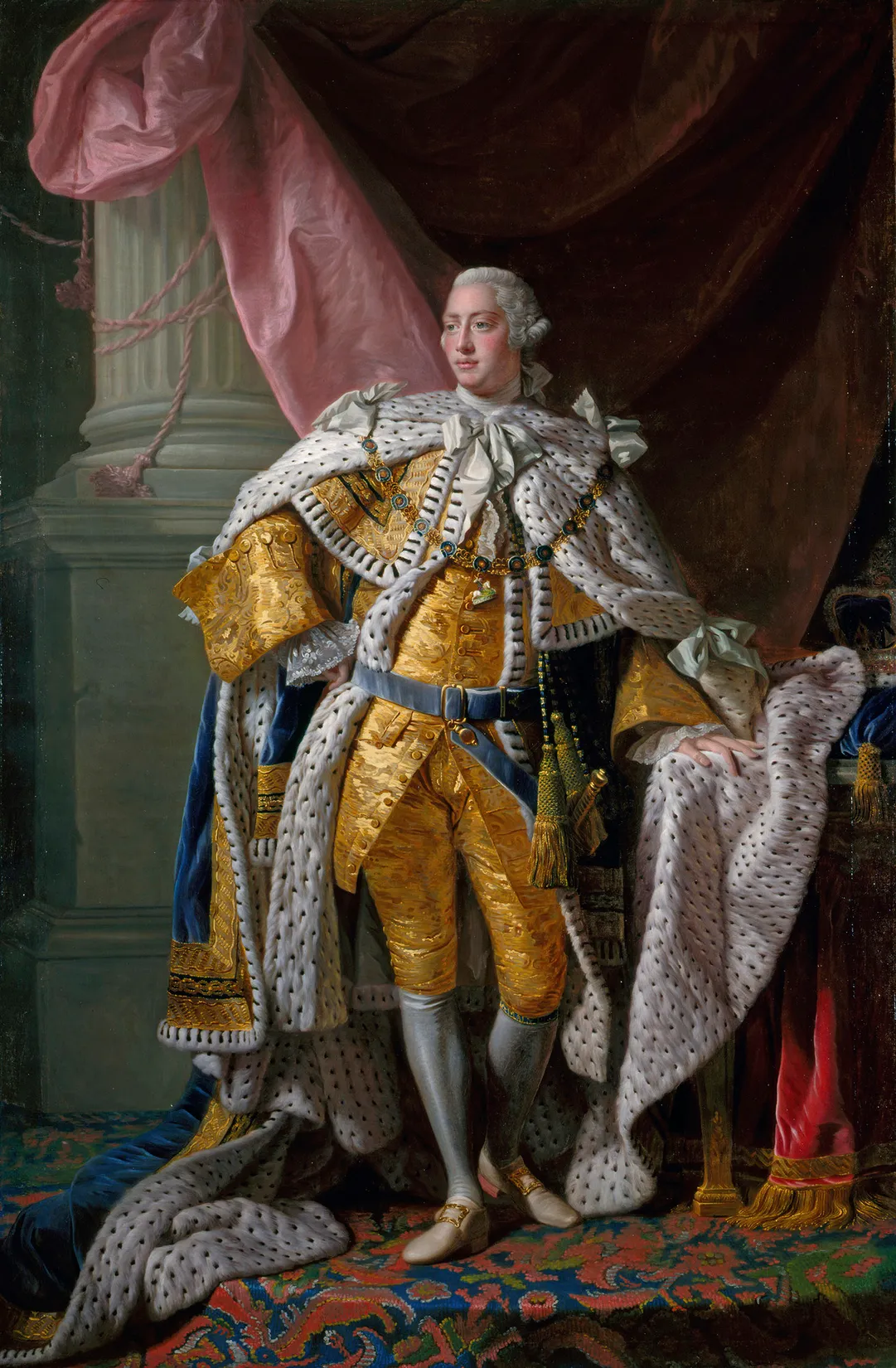
In 1793 George III sent Lord Macartney to China, nominally to offer belated congratulations to the Qianlong Emperor on his eightieth birthday, in the hope of opening more ports, stationing an envoy in Beijing and improving the terms of trade. The embassy brought astronomical instruments, clocks and guns to show off British science and industry.
Qianlong received the embassy at Rehe. After long disputes over ceremony, Macartney knelt on one knee rather than performing the full kowtow the Qing required. In his edict to the King of England Qianlong declared that “the Celestial Empire possesses all things in prolific abundance and lacks no product within its own borders”, and refused every British request. A second embassy, under Lord Amherst in 1816, did not even see the emperor.
Opium
To reverse the trade deficit, the East India Company grew opium on a massive scale in Bengal and sold it to private traders who smuggled it into China, using the silver they earned to buy tea. Opium addiction spread rapidly and silver drained out of China. In 1839 the Daoguang Emperor sent Lin Zexu to Canton to stamp out the trade. Lin confiscated more than twenty thousand chests of British-owned opium and destroyed it publicly at Humen.
The First Opium War
Britain went to war, claiming to protect its merchants and trade. On 26 January 1841 the Royal Navy landed on the north shore of Hong Kong Island and raised the flag, taking possession; the landing place is around today’s Possession Street in Sheung Wan. British forces then moved up the coast, taking city after city, and threatened Nanking. In August 1842 the Qing signed the Treaty of Nanking, ceding Hong Kong Island, opening Canton, Amoy, Foochow, Ningpo and Shanghai to trade, and paying an indemnity of twenty-one million silver dollars.
Kowloon and the New Territories
In 1856 Britain used the “Arrow incident” as a pretext to start the Second Opium War, together with France. In 1860 Anglo-French forces entered Beijing and burned the Old Summer Palace. The Convention of Peking that year ceded the Kowloon peninsula south of Boundary Street to Britain.
In 1898, amid the scramble of the powers for spheres of influence in China, Britain, citing defence needs, made the Qing sign the Convention for the Extension of Hong Kong Territory, leasing the New Territories north of Boundary Street to the Shenzhen River, together with more than two hundred outlying islands, for ninety-nine years. That same year Britain also leased Weihaiwei in Shandong.
The City of Victoria
Britain made Hong Kong a free port and built the City of Victoria on the north shore of the island; names such as Victoria Harbour and Queen’s Road remain in use. Hong Kong grew from a fishing harbour into a great centre of trade and shipping in the Far East, and a meeting place of Chinese migration and revolutionary ideas — Sun Yat-sen studied at the Hong Kong College of Medicine.
In 1984 Britain and China signed the Sino-British Joint Declaration. On 1 July 1997, when the lease of the New Territories expired, Britain returned the whole of Hong Kong to China, with Charles, Prince of Wales, attending the handover ceremony. From Qianlong’s refusal to trade to the return of Hong Kong, the story spans just over two hundred years.