
King and Barons
Medieval English kings could not do just as they pleased. In Anglo-Saxon times the king consulted the Witan, a council of nobles and bishops, on great matters; after the Conquest he summoned his great lords to advise him on war and taxation. But nothing written required him to follow their advice.
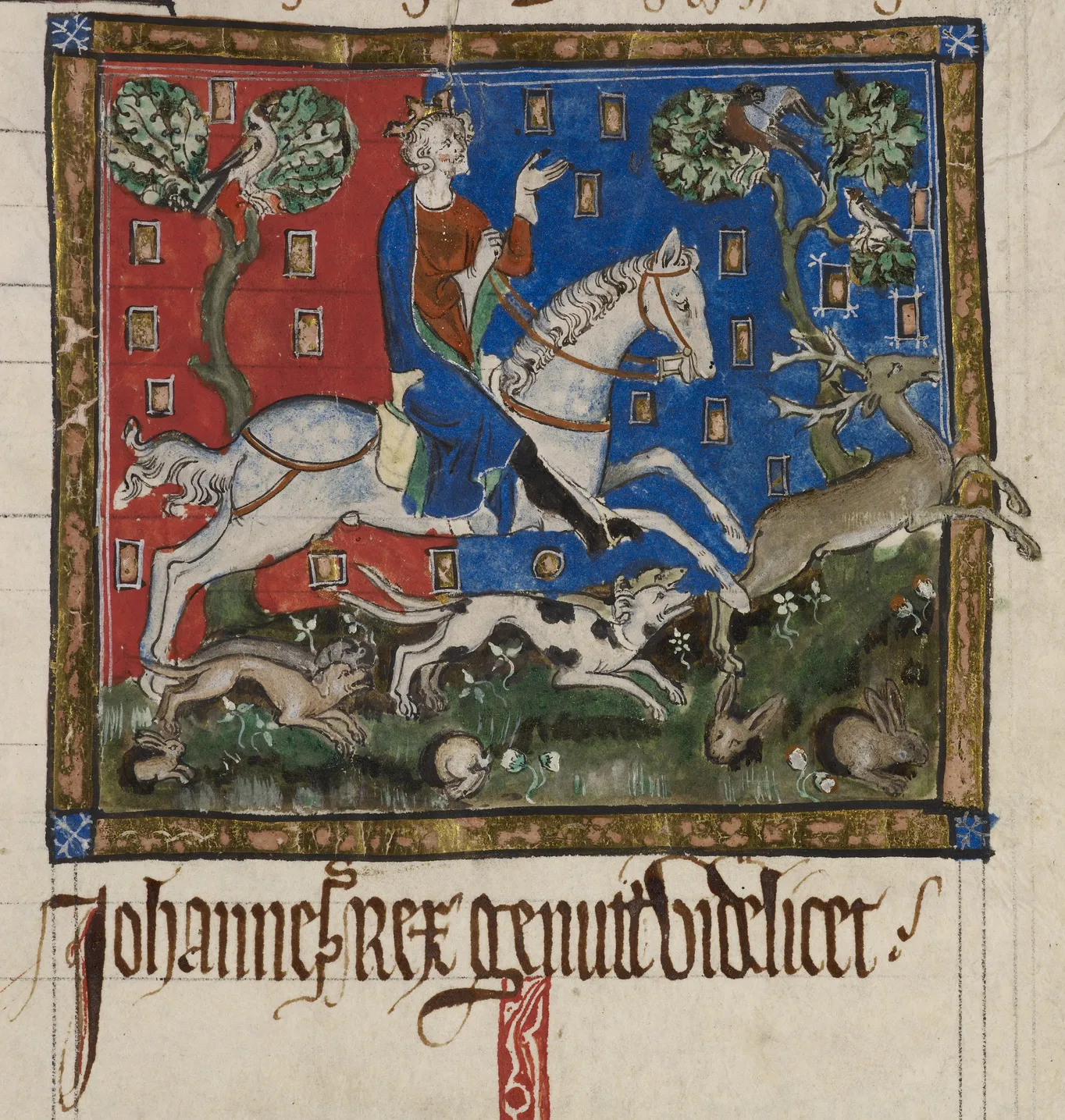
In 1215, after defeat in France and years of heavy taxation, King John faced a baronial rebellion that captured London. In June, at Runnymede, he accepted Magna Carta. Its most famous clause declared that “no free man shall be seized or imprisoned, or stripped of his rights or possessions, or outlawed or exiled … except by the lawful judgement of his equals or by the law of the land”. Another required “the common counsel of the kingdom” before the king could levy extraordinary taxes.
The pope annulled Magna Carta within weeks, but it was reissued again and again and became a symbol of the principle that the king, too, is bound by law.
The Birth of Parliament
In the thirteenth century the king’s great councils began to be called “parliaments”. In 1265 Simon de Montfort, who had defeated Henry III, summoned a parliament that included knights from the shires and representatives of the towns as well as lords and bishops. Edward I’s parliament of 1295, which likewise included representatives of shires and towns, is known as the Model Parliament.
In the fourteenth century Parliament divided into two houses: the lords and bishops in the House of Lords, the representatives of shires and towns in the House of Commons. Kings needed money for war, and grants of taxation needed the Commons’ consent. This “power of the purse” became the Commons’ greatest weapon against the Crown.
The Tudors and Parliament
When Henry VIII broke with Rome, he did it not by royal decree alone but through Acts of Parliament such as the Act of Supremacy of 1534. This made the “King-in-Parliament” the highest authority in the land: great changes required laws made by king and Parliament together. Most Tudor monarchs managed Parliament skilfully, and there was no serious conflict between them.
The Stuart Conflict
The Stuarts James I and Charles I, however, believed in the divine right of kings — that kings answered to God alone. Charles levied taxes without Parliament’s consent and imprisoned critics without trial, and in 1628 Parliament forced him to accept the Petition of Right. The next year he dissolved Parliament and did not call another for eleven years.
In 1642 the quarrel between king and Parliament became civil war. Parliament won; in 1649 Charles I was executed and England briefly became a republic. The monarchy was restored in 1660, but the question of whether king or Parliament held final authority remained unsettled.
The Glorious Revolution and the Bill of Rights
In 1688 the Catholic James II fled, and Parliament offered the crown to William of Orange and Mary on condition that they accept the Declaration of Rights, enacted the following year as the Bill of Rights. It declared that:
- the Crown could not suspend laws or exempt anyone from them without Parliament’s consent;
- the Crown could not levy taxes, or keep a standing army in peacetime, without Parliament’s consent;
- elections to Parliament should be free, and freedom of speech in Parliament could not be questioned in any court;
- no Catholic could inherit the throne.
From then on Parliament had to meet every year to pass the money and army bills, and no monarch could govern without it again. The Act of Settlement of 1701 also protected judges from dismissal without Parliament’s consent, establishing judicial independence.
Constitutional Monarchy
In the eighteenth century kings increasingly left government to ministers answerable to Parliament, and Walpole became the first prime minister; in the nineteenth the Reform Acts widened the vote step by step. Britain became a constitutional monarchy, in which the monarch is head of state but real power lies with Parliament and a government drawn from its majority. The Victorian writer Walter Bagehot said the monarch kept only “the right to be consulted, the right to encourage, the right to warn”.
It took almost five hundred years, from Magna Carta in 1215 to the Bill of Rights in 1689, to turn the idea that the king is bound by law into working institutions. This “Westminster system” went on to shape many countries and territories around the world.