
From Election to Primogeniture
Today the British throne passes by order of birth, but the rules took almost a thousand years to settle. In Anglo-Saxon England the king was chosen by the Witan from among the royal family, and was not necessarily the late king’s eldest son: Alfred the Great succeeded his brother rather than his nephews. When Edward the Confessor died in 1066, Harold, William the Conqueror and Harald Hardrada of Norway all claimed the throne, and war decided the matter.
The Norman kings had no fixed rule either. William the Conqueror left Normandy to his eldest son Robert and England to his second son, William II. When William II was killed in a hunting accident in 1100, the youngest brother, Henry I, seized the crown while Robert was still on his way home from the First Crusade. Only in the thirteenth century did primogeniture become settled: when Henry III died in 1272, his eldest son Edward I was away on crusade, yet became king at once without having to come home.
Could a Woman Inherit?
After Henry I’s only legitimate son drowned in the wreck of the White Ship, Henry made his barons swear to accept his daughter Matilda. But when Henry died in 1135 his nephew Stephen was crowned first, and England fell into nearly twenty years of civil war, the Anarchy. Matilda was never crowned, though her son Henry II eventually took the throne.
Unlike France, England never had a law barring women from the throne. France’s so-called Salic law excluded women, and claims passed through women — the root of the Hundred Years’ War. In 1553 Mary I became the first crowned queen regnant of England, and Elizabeth I, Mary II, Anne and Victoria all showed that a queen could rule as well as a king.
Ironically, because Hanover did follow the Salic law, Victoria could not become ruler of Hanover when she inherited the British throne in 1837. The Hanoverian crown went to her uncle Ernest Augustus, ending a personal union that had lasted 123 years.
Bastards and Legitimacy
Legitimacy of birth mattered enormously. William the Conqueror inherited Normandy as a bastard, but in England illegitimate children generally could not succeed. The Beauforts, John of Gaunt’s children by his mistress, were legitimised by Parliament in 1397, but Henry IV later added the words “except the royal dignity”. Henry VII’s claim came through his mother, Margaret Beaufort, so he relied chiefly on his victory at Bosworth and recognition by Parliament to secure the crown.
Declaring a rival illegitimate was a weapon in itself. In 1483 Richard III had his brother Edward IV’s marriage declared invalid, so that his nephew Edward V lost his right to the throne. Henry VIII declared both his daughters, Mary and Elizabeth, illegitimate, then in 1544 had Parliament restore them to the line of succession. On his deathbed Edward VI tried to pass over both his half-sisters and leave the crown to the Protestant Lady Jane Grey, who reigned for just nine days.
Parliament Decides
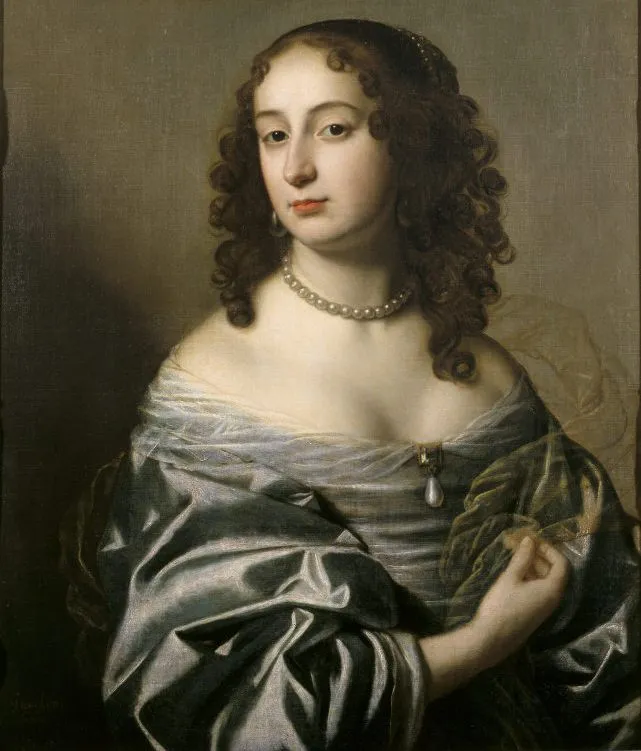
The Glorious Revolution of 1688 established Parliament’s power to decide who should wear the crown. The Act of Settlement of 1701 laid down that the throne could pass only to Sophia, Electress of Hanover, a granddaughter of James I, and her Protestant descendants, passing over more than fifty Catholics with closer claims. When Queen Anne died in 1714, Sophia had died only two months before, and the crown passed to her son George I, beginning the Hanoverian dynasty.
From then on, faith was a firm condition of kingship: the monarch could not be a Catholic and had to be in communion with the Church of England. In 1772 George III, angered by his brothers’ secret marriages to commoners, had Parliament pass the Royal Marriages Act, requiring members of the royal family to obtain the monarch’s consent to marry.
The Rules Today
The Succession to the Crown Act 2013, in force from 2015, provides that members of the royal family born after 28 October 2011 succeed in order of birth regardless of sex, and that marrying a Catholic no longer costs anyone their place in the line. The monarch, however, still may not be a Catholic. From election by the Witan to Acts of Parliament, the answer to “who can be king?” traces nearly a thousand years of change in Britain’s constitution.