
The Contest for a Crown
Ties between the English royal house and the Habsburgs go back to the thirteenth century. In 1257 Henry III’s brother, Richard, Earl of Cornwall, was elected King of the Romans — ruler-elect of the Holy Roman Empire — and crowned at Aachen. After Richard’s death the German princes chose Rudolf I of Habsburg in 1273, and the Habsburgs stepped onto the European stage. Leopold V, the Duke of Austria who held Richard the Lionheart captive in 1192, belonged to the Babenbergs, the dynasty that ruled Austria before the Habsburgs.
The Tudors and Charles V
By the early sixteenth century the Habsburgs had acquired Burgundy, Spain and the Americas through marriage and become the most powerful dynasty in Europe, and England was a valuable ally against France. In 1513 the Emperor Maximilian I even served as a volunteer in Henry VIII’s army against the French.
Henry VIII’s first queen, Catherine of Aragon, was the aunt of the Emperor Charles V. In 1522 Charles was betrothed to Henry’s daughter Mary I; the engagement was later broken off, but the two crowns remained close. When Henry asked for his marriage to Catherine to be annulled, however, Charles’s troops had just sacked Rome in 1527, and the pope, at the emperor’s mercy, could not possibly agree. England’s break with Rome owed something to Habsburg power.
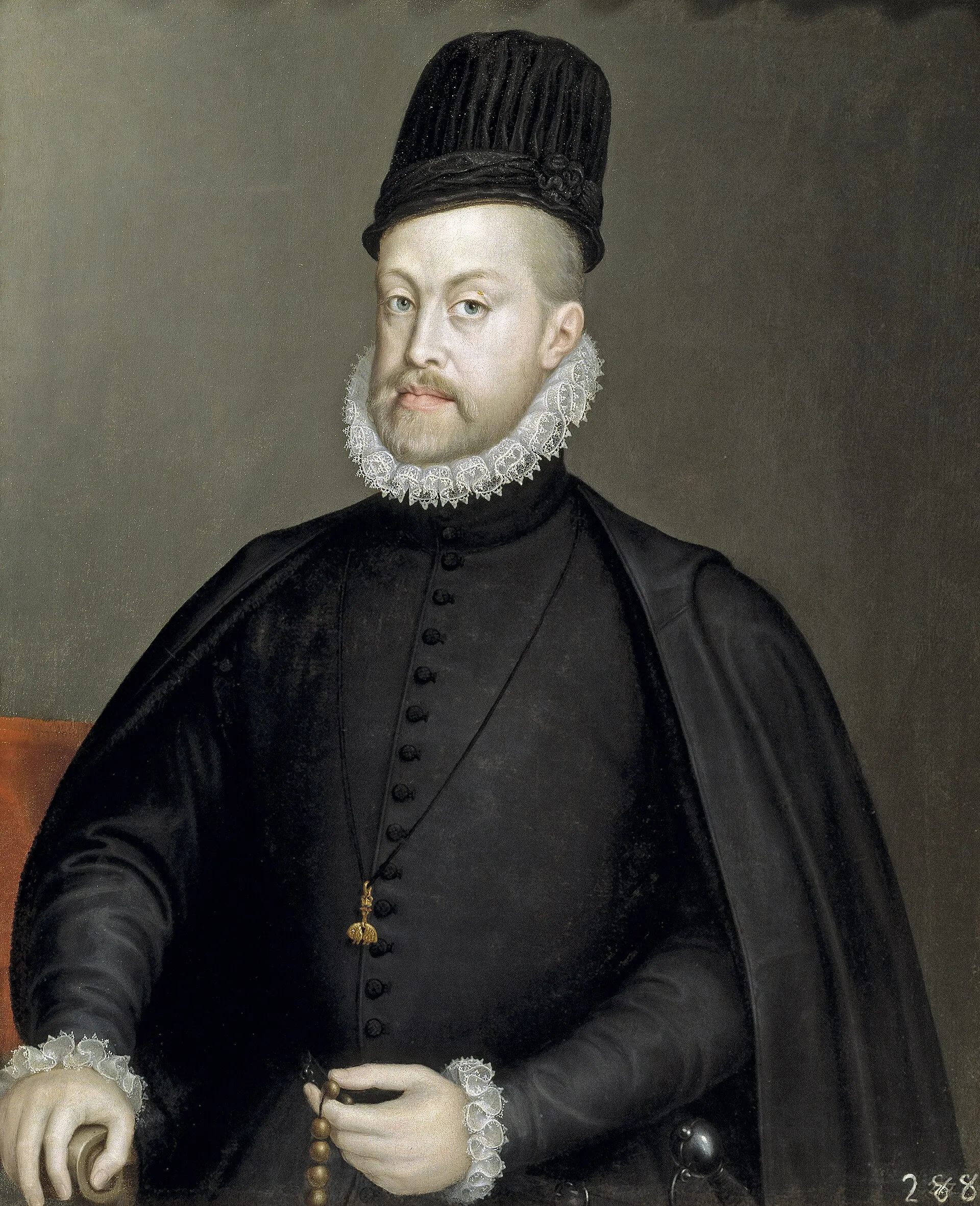
King Philip of England
In 1554 Mary I married Charles V’s son Philip, the future Philip II of Spain, in Winchester Cathedral. Under the marriage treaty Philip shared the title of King of England with Mary for as long as the marriage lasted, but he was not to interfere in English government or draw England into Spain’s wars. They had no children, and Philip spent most of his time on the Continent. After Mary’s death in 1558 he proposed to Elizabeth I, who politely declined.
Early in her reign Elizabeth also negotiated for almost ten years over a marriage to Archduke Charles of Austria, Charles V’s nephew, but the match foundered on religion. Relations with Spain grew steadily worse, and in 1588 Philip II sent the Armada against England, only to see it fail.
The Thirty Years’ War
In the early seventeenth century James I hoped for friendship with Spain and planned to marry his son Charles I to the Spanish Infanta Maria Anna. In 1623 Charles went to Madrid in person to woo her but came home empty-handed; the Infanta later married the Emperor Ferdinand III.
Meanwhile James’s daughter Elizabeth Stuart had married Frederick V, Elector Palatine. In 1619 Frederick accepted the crown of Bohemia from rebels against the Habsburg Emperor Ferdinand II; the next year he was crushed at the Battle of White Mountain and spent the rest of his life in exile, and Elizabeth became known as the “Winter Queen”. Her grandson later inherited the British throne as George I, the first Hanoverian king. For the Battle of White Mountain, see the topic “The Counter-Reformation and the Baroque” on the sister Habsburg site.
Eighteenth-Century Allies
In the eighteenth century Britain and Austria allied again and again to contain France. In the War of the Spanish Succession Britain backed the Habsburg Archduke Charles, later the Emperor Charles VI, for the Spanish throne, and in 1704 the Duke of Marlborough and Austria’s Prince Eugene together routed the French at Blenheim.
Charles VI had no son, and when his daughter Maria Theresa succeeded him, Prussia and France fell upon her lands. Britain sent troops to support Austria, and in 1743 George II commanded in person at Dettingen — the last time a British monarch led an army in battle. Yet in 1756 Austria allied with its old enemy France, while Britain joined Prussia: the “Diplomatic Revolution”.
From Allies to Enemies
In the Napoleonic Wars Britain and Austria fought side by side once more, and at the Congress of Vienna in 1815 the British Foreign Secretary Lord Castlereagh and the Austrian Foreign Minister Metternich rebuilt the order of Europe together. For most of the following century the two countries were on good terms. In 1913 Archduke Franz Ferdinand, heir to the Austro-Hungarian throne, was a guest at a shooting party in England. The next year he was assassinated at Sarajevo, setting off the First World War, and on 12 August 1914 Britain declared war on Austria-Hungary.
When the war ended in 1918 the Habsburg monarchy fell, and six centuries of contact between the two royal houses came to a close.