
Before the Reformation
Early sixteenth-century England was a devoutly Catholic country. Its churches were richly decorated, and people threw themselves into the Mass, pilgrimages and prayers for the dead. In the fourteenth century John Wycliffe had criticised the Church, and his followers, the Lollards, translated the Bible into English, but they were harshly suppressed. When Martin Luther launched the Reformation in Germany in 1517, the young Henry VIII wrote a treatise against him and was rewarded by the pope with the title “Defender of the Faith”.
Henry VIII: Politics First
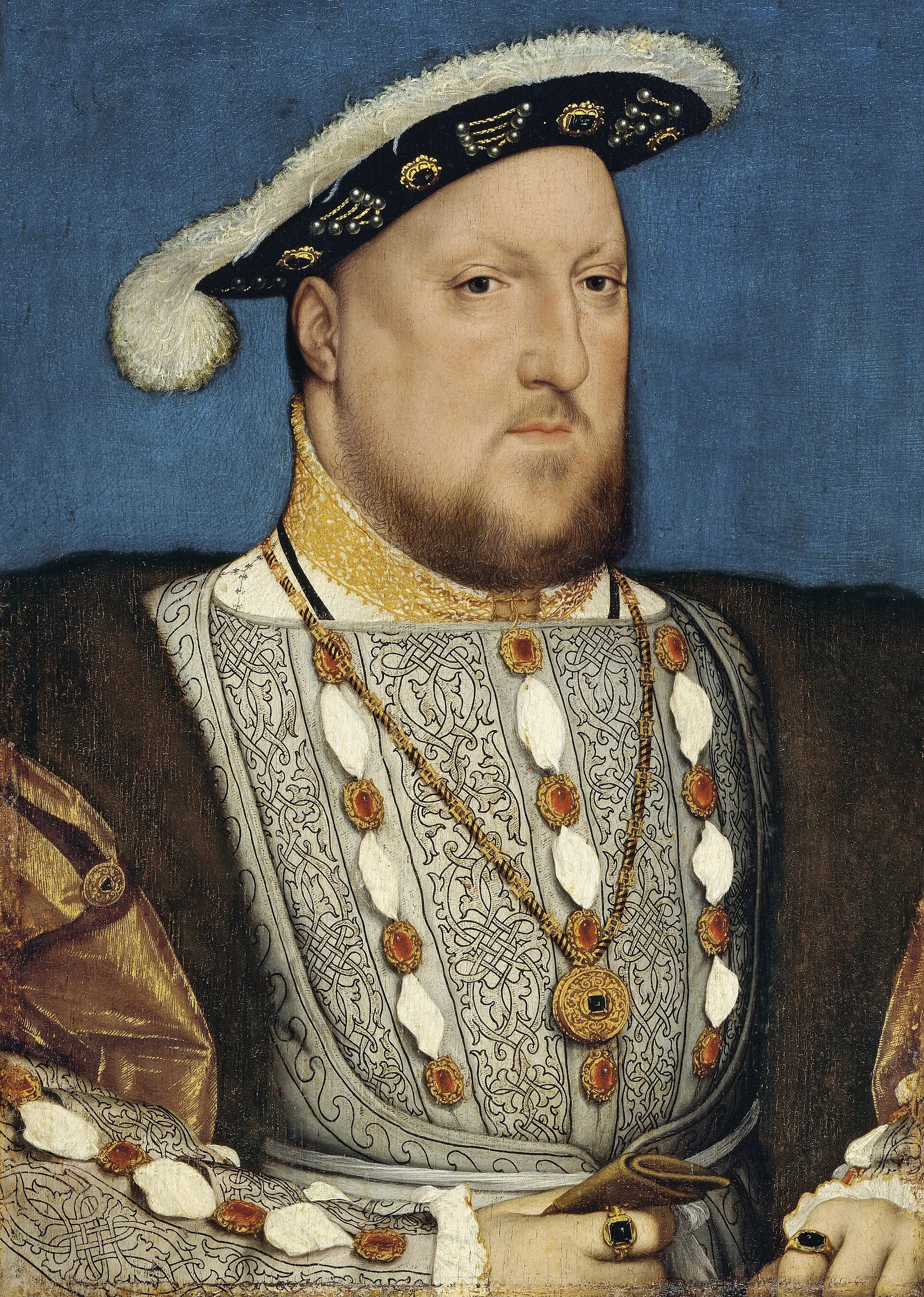
The English Reformation began not with a dispute over doctrine but with the king’s marriage. When the pope refused to annul Henry VIII’s marriage to Catherine of Aragon, Henry cut England’s ties with Rome step by step through Acts of Parliament. The Act of Supremacy of 1534 declared the king Supreme Head of the Church of England, and between 1536 and 1541 some eight hundred monasteries were dissolved and their lands and wealth taken by the Crown.
In doctrine, though, Henry remained conservative. His Six Articles of 1539 upheld the main Catholic teachings on pain of death. At the same time he allowed the English Great Bible to be placed in churches, so that ordinary people could read the Scriptures.
Edward VI: A Protestant Revolution
Henry’s son Edward VI had been brought up a Protestant, and after he came to the throne at nine his regents and Archbishop Thomas Cranmer carried through a thoroughgoing Protestant reformation. In 1549 and 1552 Cranmer’s English Book of Common Prayer replaced the Latin Mass; images, wall paintings and altars were stripped from churches, and clergy were allowed to marry. The pace of change provoked the Prayer Book Rebellion in the south-west.
Mary I: The Catholic Restoration
When Edward VI died young in 1553, his half-sister Mary I succeeded. A devout Catholic, she restored ties with Rome and married the Habsburg prince Philip of Spain. Some three hundred people who would not give up their Protestant faith, Cranmer among them, were burned at the stake. Protestants called her “Bloody Mary”, and John Foxe’s Book of Martyrs, published in 1563, kept the memory alive in England for centuries.
Elizabeth I: The Middle Way
Elizabeth I, who succeeded in 1558, broke with Rome again. The settlement of 1559 made her “Supreme Governor” of the Church of England and restored the Book of Common Prayer; the Thirty-Nine Articles, settled in 1571, were Protestant in doctrine, but the Church kept its bishops and many traditional ceremonies. She asked her subjects for outward conformity, and Catholics who refused to attend Church of England services were fined.
In 1570 the pope excommunicated Elizabeth and called on Catholics to overthrow her, and from then on English Catholics were regarded as potential traitors. Meanwhile the Puritans, who wanted every trace of Catholicism swept away, were unhappy with the middle way too — a tension that became one of the roots of the Civil War in the next century.
Legacy
In little more than twenty years England’s official religion changed course four times. The Church of England that finally emerged was neither Roman Catholic nor quite like the Lutheran or Calvinist churches of the Continent. Fear of Catholicism ran deep in English politics: both the Glorious Revolution of 1688 and the Act of Settlement of 1701 turned on keeping Catholics from the throne.
In the same years the Habsburgs were carrying out the Counter-Reformation in Austria and Bohemia, making those lands Catholic once more. For a comparison of these very different paths, see the topic “The Counter-Reformation and the Baroque” on the sister Habsburg site.